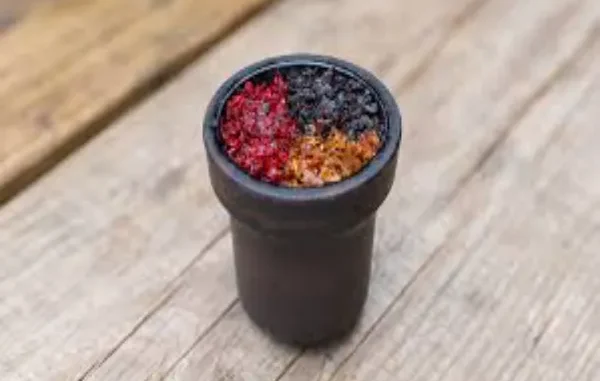
Flavor engineering is no longer limited to food and beverage industries. From specialty coffee to functional teas, manufacturers increasingly rely on chemistry and material science to design sensory experiences. One lesser-known example of this trend exists in shisha tobacco production — a process that blends agricultural science, food chemistry, and thermal engineering.
Although hookah is often viewed through a cultural or social lens, the manufacturing of shisha itself involves carefully controlled systems designed to deliver consistent aroma, vapor density, and taste. Understanding how this product is made offers a compelling look at how modern flavor systems are built.
Tobacco as a Flavor Carrier
The process begins with cured tobacco leaves selected less for nicotine impact and more for structural properties. These leaves act as a neutral carrier, absorbing moisture and aromatic compounds while maintaining integrity under indirect heat.
After harvesting, tobacco undergoes curing to stabilize moisture content and halt enzymatic activity. This prevents uncontrolled oxidation, which can produce bitterness and degrade flavor precursors.
Chemically, cured leaves contain cellulose, natural sugars, organic acids, alkaloids, and polyphenols. Together, these compounds form a porous matrix capable of holding liquids and volatile aromas — a foundational requirement for shisha production.
Unlike traditional smoking products, the goal here is not combustion but vaporization.
Glycerin: The Engine Behind Vapor
Vegetable glycerin plays a central role in this transformation.
Widely used in food and pharmaceutical manufacturing, glycerin functions as a humectant — a compound that attracts and retains moisture. Its molecular structure allows it to bind water efficiently, creating the thick vapor clouds associated with hookah sessions.
Beyond vapor generation, glycerin also acts as a flavor carrier. Aromatic compounds dissolve readily into it, enabling even distribution throughout the tobacco blend.
Without glycerin, shisha would burn rapidly. With it, the mixture gently vaporizes under controlled heat, producing smoke-like clouds without direct combustion.
Sugars and Molasses: Texture Meets Thermodynamics
Molasses or honey is added not only for sweetness but also for physical behavior.
Sugars increase viscosity, slow dehydration, and influence how heat moves through the mixture. They also enhance the binding of flavor molecules while contributing subtle caramelized notes when exposed to higher temperatures.
From an engineering standpoint, this creates a more stable product that releases aroma gradually rather than all at once.
The balance between glycerin, sugar content, and leaf structure determines how long flavors last during use — often between 45 and 90 minutes per session.
Flavor Infusion as a Chemical Process
The most technically complex stage is flavor blending.
Manufacturers rely on food-grade aromatic compounds similar to those used in beverage formulation. These include esters for fruity notes, aldehydes for citrus profiles, and ketones for creamy or vanilla tones.
Rather than simply coating the tobacco, producers warm the base mixture and introduce flavors slowly, followed by resting periods that allow molecular diffusion to occur. This resting phase enables volatile compounds to penetrate deeply into leaf fibers, creating uniform aroma release.
Without this step, flavor would remain surface-level — intense initially but quick to fade.
In many ways, this mirrors processes used in wine aging or coffee degassing, where time allows chemical equilibrium to stabilize.
Heat Behavior and Session Stability
Shisha is designed for indirect heating. Instead of direct flame, warmth travels from charcoal through air gaps and heat-management layers, gradually raising the temperature of the mixture.
High-quality blends are engineered to:
- Release moisture evenly
- Vaporize glycerin steadily
- Maintain consistent flavor output
This requires precise control of particle size, liquid ratios, and packing density during manufacturing.
Poorly balanced products either scorch quickly or struggle to produce vapor — both indicators of flawed process calibration.
Quality Control at Scale
Commercial producers treat shisha more like a food product than a traditional tobacco item.
Facilities routinely test for moisture content, pH balance, microbial stability, and flavor consistency. Because glycerin and sugars create environments where microbes could develop, sanitation protocols and sealed packaging become critical.
Modern production increasingly relies on stainless steel mixers and climate-controlled curing rooms to maintain batch uniformity.
The objective mirrors that of any advanced manufacturing system: reproducibility.
Each unit must perform identically under the same conditions.
Why Production Science Matters
For readers interested in the technical side of this process — including ingredient sourcing, blending methodology, and chemical interaction — this detailed breakdown of the science of shisha production and ingredients provides an accessible deep dive published by Hookah Vault.
Resources like this help demystify how flavor systems are constructed and why product quality varies so widely between brands.
Understanding the underlying chemistry also empowers consumers to recognize well-engineered blends versus poorly formulated ones.
A Window Into Sensory Engineering
Shisha production reflects a broader trend across modern manufacturing: sensory design.
Whether in specialty beverages, plant-based foods, or aromatic consumer goods, companies increasingly engineer experiences at the molecular level — optimizing aroma release, moisture retention, and thermal response.
Hookah tobacco represents a niche but compelling example of this discipline.
Behind every cloud of vapor lies a carefully balanced system shaped by chemistry, materials science, and process control — a reminder that even culturally rooted products often depend on sophisticated modern engineering.
Leave a Reply