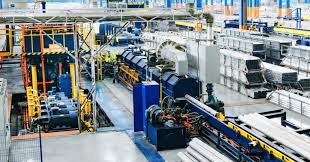
Walk through almost any production facility and you will find compressed air doing jobs it was never really designed for. Drying parts. Blowing off water. Clearing debris from conveyor lines. It works, and for decades nobody questioned it much. But as energy costs have climbed and manufacturers have been forced to look harder at operational expenses, compressed air is getting a second look, and what facilities managers are finding is not always comfortable.
The core problem is efficiency, or the lack of it. Compressed air systems are notoriously expensive to run. A significant portion of the energy used to generate compressed air is lost as heat during compression. By the time that air reaches the nozzle doing the actual work, only a fraction of the original electrical energy is converting into useful force. For tasks like drying and blow-off, which require sustained, consistent airflow across wide surfaces, that inefficiency compounds quickly.
Blower-powered systems have emerged as a practical alternative, and in facilities that have made the switch, the results have reshaped how those teams think about energy use on the production floor.
The Real Cost of Running Compressed Air
The sticker price of compressed air equipment rarely tells the full story. Compressors require regular maintenance, and the infrastructure to distribute compressed air throughout a facility, pipes, fittings, regulators, dryers, and filters, adds up. Add the energy cost of running a compressor at the pressures required for blow-off and drying applications, and the total cost of ownership climbs sharply.
At the application level, the inefficiency becomes even clearer. Flat nozzle compressed air systems, commonly used for blow-off, deliver high pressure at the nozzle tip but lose velocity rapidly with distance. A nozzle operating at 80 PSI can lose nearly all of its effective pressure within inches of the target surface. In practice, this forces facilities to run more nozzles, at higher pressures, for longer durations than the actual drying or blow-off task technically requires.
One steel manufacturer discovered this the hard way. Their compressed air system for drying steel strip required 468 HP across 93 nozzles to achieve adequate results. When they transitioned to a blower-based system, total horsepower requirements dropped by 336 HP on a single line, representing over $131,000 per year in energy savings on that line alone, before any maintenance cost reductions were factored in.
The Technology Behind the Shift
Blower-powered air systems work on a fundamentally different principle. Instead of compressing air to high pressure and then releasing it through small orifices, centrifugal blowers move large volumes of air at moderate pressures across wide, precisely shaped outlets. The result is a broad, consistent sheet of high-velocity air that covers more surface area, more evenly, with significantly less total horsepower.
The application that has driven this shift in manufacturing is the air knife. Modern industrial air knife drying systems use blower-generated airflow directed through a precision-engineered knife-shaped outlet, producing a focused curtain of air that strips water, debris, and contaminants from parts, products, or surfaces moving along a conveyor. Because the airflow is continuous and evenly distributed across the full width of the knife, coverage is consistent without requiring the kind of overlapping nozzle arrays that compressed air setups typically depend on.
The physics of the approach also reduce pressure loss over distance. Blower air knives maintain effective velocity much further from the knife face than conventional nozzles, which matters in applications where products vary in size or where mounting constraints make close placement difficult.
Where the Savings Show Up
The facilities that have seen the most dramatic results from switching tend to share a few characteristics. They were running continuous or near-continuous production lines. They had drying or blow-off as a recurring step in the process. And they had been running compressed air for those applications for long enough that nobody had recently questioned whether it was the right tool.
A building materials manufacturer processing 16.5-foot rotating drums had been using both water spray headers and compressed air to clean cement slurry from the drums between production cycles. The compressed air requirement alone was nearly 200 HP per drum. After switching to a blower and air knife system operating at 1.75 PSI, they achieved 160 HP savings per drum, while eliminating the water disposal costs and filtration overhead that came with the spray header approach.
For automotive manufacturers, the math often plays out at the paint prep stage. Residual water on parts entering a paint tunnel causes adhesion failures and costly rework. Traditional blow-off with compressed air can handle the task, but the energy cost across a production shift, every shift, every week, adds up to a significant line-item. Blower-based drying systems doing the same job routinely cut energy consumption for that step by 50% or more.
Beyond Energy: Quality and Consistency
Cost reduction tends to be what gets the attention in these conversations, but manufacturers who have made the switch often point to quality consistency as the more meaningful long-term benefit.
Compressed air blow-off systems are sensitive to supply pressure fluctuations. If compressor demand spikes elsewhere in the facility, line pressure can drop, and the blow-off step that was calibrated at one pressure is now running at another. On a fast-moving conveyor line, that inconsistency shows up as wet or contaminated parts reaching downstream processes.
Blower systems are less susceptible to that variability. The blower runs at a set speed, delivers a consistent airflow, and the process output stays predictable. For applications where part cleanliness or dryness is a quality control checkpoint, that consistency has real value beyond what shows up on an energy bill.
Making the Case Internally
The challenge for facilities and operations managers evaluating this switch is rarely technical. The engineering case is usually straightforward once the numbers are on paper. The harder conversation is internal: justifying capital investment in replacement equipment against a system that, on the surface, is already working.
The most effective approach is to isolate a single high-use application and run the energy cost calculation against actual operating hours. For most continuous manufacturing environments, compressed air drying and blow-off applications run thousands of hours per year. When the annual energy cost of the current setup is laid against the projected cost of a blower system, payback periods of two to three years are common, and in high-volume environments, often shorter.
The maintenance angle is worth including in that analysis as well. Compressed air systems require filter changes, leak monitoring, and ongoing compressor service. Blower systems have fewer consumable components and tend to have lower maintenance overhead over their service life.
A Shift Worth Examining
Compressed air is not going away. There are applications where it is genuinely the right tool, and most facilities will continue running it for many tasks. But the assumption that it is automatically the correct choice for drying and blow-off, simply because it was the default choice, deserves scrutiny.
The manufacturers who have moved away from compressed air for these applications are not reporting dramatic, disruptive changes to their operations. What they are reporting is lower energy consumption, more consistent output quality, and maintenance schedules that have gotten simpler rather than more complicated. For production lines that run continuously and depend on reliable drying or blow-off at scale, that combination is hard to ignore.
Leave a Reply