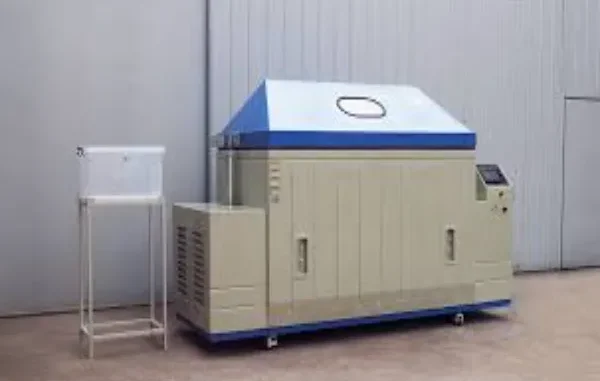
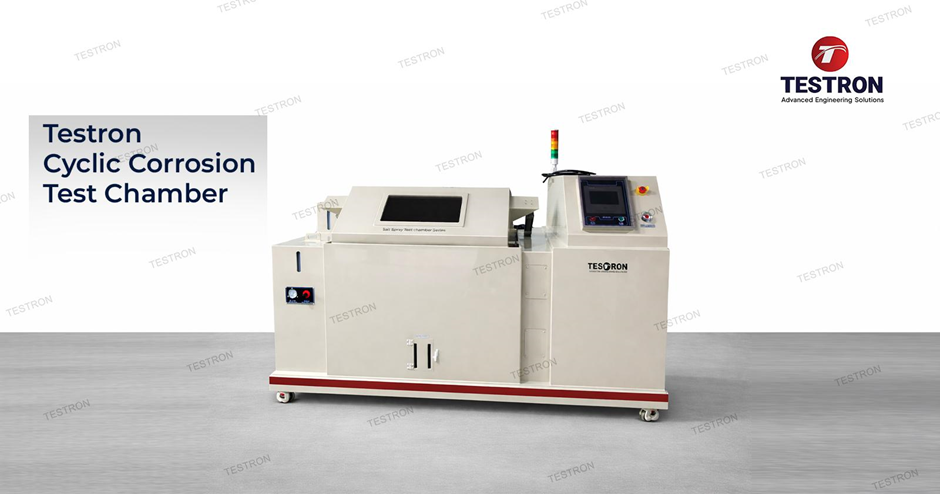
If you work with coated metals, automotive parts, fasteners, or industrial components, you already know one thing: corrosion is not only a surface issue; it’s a performance risk. A small failure today can become a big warranty claim tomorrow. That’s exactly why using a cyclic corrosion test chamber in the USA is becoming a standard practice across quality labs and manufacturing units.
Instead of guessing how your material will behave in real weather conditions, you can simulate it in a controlled setup and get solid, repeatable data. Let’s break this down in a simple, helpful way, so you clearly understand how it works, which standards apply, and what affects your buying decision.
What Is a Cyclic Corrosion Test Chamber in the USA?
Think of a cyclic corrosion test chamber as an advanced environmental chamber that recreates multiple weather conditions within a single programmable system. You are not just spraying salt continuously. Instead, you are running timed exposure cycles.
A modern cyclic corrosion chamber typically allows you to program:
- Salt fog exposure
- Dry air phases
- Controlled humidity
- Temperature variation
- Condensation cycles
Because of this multi-step approach, your test results better reflect actual service conditions. Moreover, you can repeat the cycle as often as needed to provide consistent comparison data across batches.
Key Standards for Cyclic Corrosion Test Chamber in the USA
If you are buying for a B2B lab, standards matter a lot. Test data is only useful when it follows recognized methods. Most cyclic corrosion test chambers in the USA are designed to support major global standards such as:
- ASTM corrosion standards
- ISO corrosion methods
- SAE automotive test cycles
- DIN environmental exposure methods
Many government-supported materials research programs, such as the National Institute of Standards and Technology (NIST) materials corrosion performance database, offer valuable corrosion behavior data and guidelines on environmental testing and materials performance, which labs often reference when setting up corrosion protocols.
Many protocols also combine salt and cyclic exposure requirements, which is where a cyclic salt spray test chamber configuration becomes useful. When your system matches standards, your reports become audit-ready. Moreover, your customers trust your validation data more.
Working Principle of a Cyclic Corrosion Test Chamber
Let’s keep this practical. When you run a test inside a cyclic corrosion test chamber in the USA, your sample goes through pre-set environmental stages. Everything is automated, so you don’t need manual switching.
A typical working cycle looks like this:
- Salt Spray Phase: Your sample is exposed to a good mist of salt solution to initiate corrosion reactions.
- Humidity Phase: The chamber increases moisture levels to support chemical activity.
- Dry Phase: Air circulation removes moisture, allowing surface reactions to change.
- Temperature Phase: Heat control speeds up reaction behavior and stress response.
These phases repeat in loops. A programmable cyclic corrosion tester lets you adjust timing, sequence, and intensity. Therefore, you can match automotive standards, coating specs, or custom protocols without changing hardware.
What Affects Cyclic Corrosion Test Chamber Price
Let’s talk about money because budget planning always comes up early. The price of the cyclic corrosion test chambercan vary widely depending on the configuration. You are not just buying a box; you are buying control, precision, and repeatability.
Main price drivers include:
- Chamber size and sample capacity
- Controller and touchscreen interface
- Cycle programming flexibility
- Sensor accuracy
- Build material quality
- Automation level
- Data logging software
- Compliance certification
- Service and calibration support
Therefore, when comparing quotes, don’t focus only on the base price. Look at capability vs long-term value.
Where You Will Commonly Use a Cyclic Corrosion Test Chamber in the USA
You will see heavy use of a cyclic corrosion test chamber in the USA across industries where durability is critical:
- Automotive and EV components
- Aerospace hardware
- Protective coatings and paints
- Defense parts
- Marine equipment
- Construction fasteners
- Industrial machinery
If you supply to OEMs, you are often required to submit corrosion cycle results. Thus, having in-house capability saves both time and outsourcing cost.
Why You Should Care About a Cyclic Corrosion Test Chamber
If your products are exposed to moisture, salt, heat, or changing weather situations, corrosion testing is no longer optional. Buyers, regulators, and OEM partners expect proof of durability. Therefore, operating a cyclic corrosion test chamber in the USA helps you validate performance before your product reaches the field.
Unlike single-condition tests, cyclic testing recreates real-life exposure practices. Your parts go through wet, dry, humid, and salt conditions in repeating cycles. Thus, you get a much closer match to real outdoor environments.
This is why many labs now prefer a cyclic corrosion test chamber over basic corrosion methods; it delivers you deeper insight, not only surface-level results.
How You Can Choose the Best Cyclic Corrosion Test Chamber in the USA
Selecting the Best cyclic corrosion test chamber is easier when you ask the right questions. Instead of blindly chasing specs, fit the machine to your actual workload.
Check these points:
- Which test standards must you follow?
- What sample size do you test regularly?
- How complex are your exposure cycles?
- Do you need remote monitoring?
- How detailed should your reports be?
- Is after-sales calibration available?
Also, always evaluate the experience of cyclic corrosion test chamber manufacturers and the technical depth of your cyclic corrosion test chamber supplier. Support quality matters just as much as machine quality.
Conclusion
If you want real confidence in your material durability data, investing in a cyclic corrosion test chamber in the USA is a clever move. You get realistic simulation, standards-based testing, and repeatable results that directly support your product quality and compliance goals. Moreover, it helps you reduce field failures and improve buyer trust.
If you are planning to promote your corrosion testing abilities, you can explore advanced corrosion and environmental testing systems from Testron Group and request a demo to see the configuration that best satisfies your lab requirements.
Leave a Reply