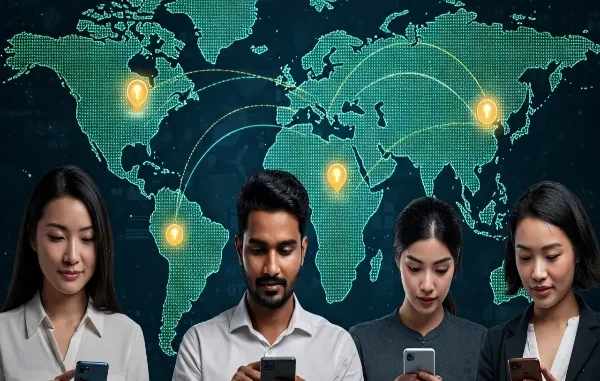
The evolution of how people move money has changed drastically. Cash gave way to credit cards, and cards made room for mobile payments. Now, digital wallets are becoming more powerful. They have the capacity to transfer money even from the other side of the globe, in seconds.
These digital wallets became infrastructure: bridges that link individuals, businesses, and services together through different currencies and borders. A McKinsey report in 2024 found that increasingly, over 60% of payments online are made via a digital wallet worldwide. In certain regions, such as Southeast Asia and Latin America, digital wallets are not an option. They’re the first point of contact for availing financial services.
How did all these happen? And why is fintech significantly involved in this change?
The Internet Made Cross-Border Business Normal
Before fintech companies entered the picture, international payments were slow, expensive, and confusing. Traditional bank wires could take up to five business days and cost up to $50 per transfer, painful if you were sending small amounts or getting paid frequently. For millions of unbanked or underbanked people, getting paid internationally wasn’t even possible.
But business went global anyway. Remote work, e-commerce, and digital services made it normal for a student in Nigeria to sell design work to a client in the U.K., or for a small fashion store in Bali to ship custom orders to Europe. What lagged behind was the ability to move money easily.
That gap created a massive opportunity for fintech.
Companies like Wise (formerly TransferWise) changed how international transfers worked by using local bank accounts to avoid traditional cross-border fees. Payoneer became a lifeline for freelancers and online sellers. Revolut built a borderless bank account that works across currencies.
The Rise of Digital Wallets
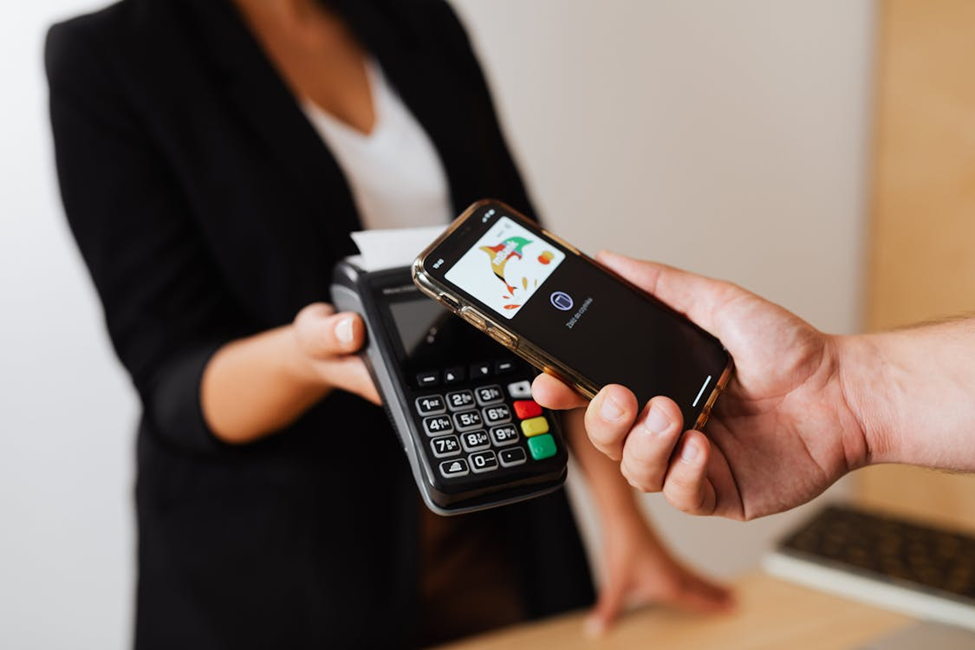
If you’ve ever sent money through Cash App, Venmo, or Revolut, or paid for a subscription using PayPal, you’ve used a digital wallet. These apps function as an online wallet where you can pay, receive, convert, or withdraw funds. They also give options to link to banks, which gives users the capability to make cash or cashless payments.
In developing countries, digital wallets also solved a long-standing problem: millions of people don’t have bank accounts, but almost everyone has a smartphone. That led to the growth of mobile-first financial ecosystems. Kenya’s M-Pesa is a strong example. Launched in 2007, it now processes over half of Kenya’s GDP annually through mobile money transfers.
Turning Payments into a Global Experience
For years, cross-border payments relied on SWIFT—a banking network created in the 1970s. It still works, but it wasn’t designed for instant money movement. Fintech companies built new systems on top of APIs, cloud software, and mobile tech. Instead of routing everything through banks, they built digital rails—technological pathways that carry payments quickly and transparently.
Digital wallets now let users:
- Convert currencies at near market rates
- Receive international payments instantly
- Withdraw money from local banks
- Pay using QR codes or mobile numbers
- Use built-in fraud protection tools
Even industries that weren’t traditionally part of the finance world now rely on wallet technology. Streaming platforms, ride-hailing apps, e-commerce marketplaces, mobile games, real money slot sites, and comparison platforms all integrate digital wallets to handle payments securely
The Role of Security
Cross-border money movement attracts cybercrime, so payment security has to be strong. Wallet providers now rely on biometric logins, tokenization, behavioral analytics, and AI fraud detection. Stripe, PayPal, and Adyen each reported using machine learning to stop suspicious activity in real time before transactions even complete.
Regulation is catching up, too. The European Union requires PSD2-compliant authentication. Singapore, Australia, and the U.S. have launched new frameworks for safer digital transactions. Trust, not just speed, is now the deciding factor for global financial adoption.
What Comes Next
The future is heading toward invisible payments—transactions built directly into services so users don’t think about how they pay. Buy Now, Pay Later tools, in-app transfers, crypto payments, and even tokenized bank deposits are emerging as part of the digital wallet ecosystem.
Another significant change is interoperability. The Bank for International Settlements is testing systems connecting digital payments between Asia, Africa, and the Middle East without traditional bank bottlenecks. In addition, technology giants are pushing deeper into finance. Apple now provides savings accounts; Google Pay is pushing out across Asia; and Ant Group is continuing to combine Alipay with transport, lifestyle apps, and retail.
Cross-border finance used to be something only banks controlled. Today, it’s shaped by software, smartphone apps, and user experience. Digital wallets provide individuals with speed, control, and access. And that access is what creates opportunity for businesses to sell anywhere in the world, for freelancers to earn income outside their own country, and for economies to create growth by participating in the digital world.
Money moves faster now because people do. Fintech simply built the roads.
Leave a Reply