
The Hong Kong government recently disclosed through the official gazette that it has launched a public consultation on introducing the Crypto-Asset Reporting Framework (CARF) and revising the Common Reporting Standard (CRS), with the goal of commencing automatic exchange of information arrangements with other tax jurisdictions in 2028. The publication of this timeline is seen by the market as an important signal that Hong Kong is further aligning its crypto-asset regulation with international tax compliance standards. It also reflects the authorities’ attempt to strike a balance between maintaining financial competitiveness and responding to international regulatory pressure.
Against the backdrop of the continued expansion of real-world cryptocurrency use cases, tax transparency is no longer limited to investment and trading activities. It has also extended to payments, cross-border transfers, and specific application sectors, including crypto gambling and other activities that use digital assets as a settlement medium. The growth of these scenarios has led regulators to pay closer attention to the information gaps that decentralized technologies may create, and has become one of the key practical drivers behind the implementation of the CARF regime.
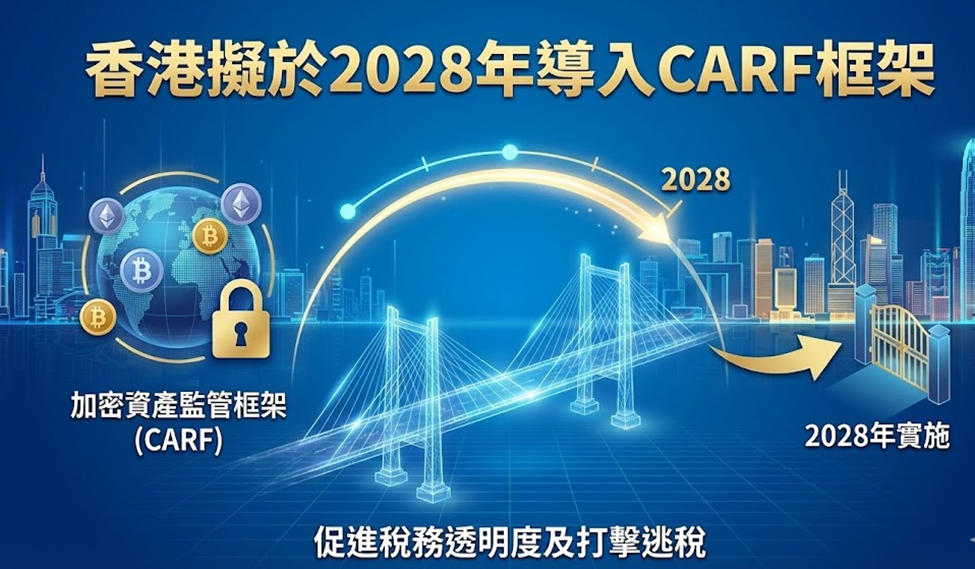
CARF was led and developed by the Organisation for Economic Co-operation and Development (OECD) with the aim of establishing a cross-border automatic exchange standard for tax information related to crypto assets. Under the framework design, qualifying crypto-asset service providers are required to collect customers’ identity information, tax residency status, and transaction data, and report them to the local tax authority, which will then conduct international information exchanges. Its operational logic is similar to the existing CRS mechanism, but its scope specifically focuses on crypto-asset-related activities.
Hong Kong has already established a mature institutional foundation for the exchange of tax information in traditional finance. Since amending the Inland Revenue Ordinance in 2016, financial institutions have been required to comply with CRS and FATCA arrangements and regularly report specified account information to the Inland Revenue Department. With the introduction of CARF, this existing framework is expected to extend into the crypto-asset sector, forming a more comprehensive information exchange network.
On the regulatory front, Hong Kong has in recent years continued to refine its virtual asset framework. Since the Securities and Futures Commission introduced a licensing regime for virtual asset trading platforms, crypto trading activities have gradually been brought under a statutory regulatory framework. Between 2024 and 2025, the authorities also put forward legislative proposals concerning over-the-counter trading and broader virtual asset services, indicating that regulatory focus is expanding from individual trading platforms to the entire service chain.
Market participants generally note that if CARF is formally enacted and implemented in Hong Kong, it will have substantive implications for crypto trading platforms, custodians, and individual users. At the platform level, existing customer due diligence and data systems may need to be adjusted to meet new reporting requirements. For individual users, the traceability of cross-border transaction records will increase significantly, and the tax gray areas created by anonymity are expected to narrow further.
Some industry observers point out that the advancement of CARF may also reshape how market participants choose jurisdictions. As multiple regions worldwide simultaneously strengthen crypto-asset tax compliance, regulatory clarity and institutional stability may become key factors influencing where platforms establish operations and where capital flows, rather than regulatory leniency alone serving as the primary consideration.
Banks and traditional financial intermediaries may also be indirectly affected. As crypto assets are gradually incorporated into the overall tax information exchange system, financial institutions may need to more comprehensively assess clients’ crypto-asset activities when conducting fund flow monitoring and customer due diligence, in order to meet broader compliance requirements. At the same time, family offices and high-net-worth client services may need to incorporate crypto assets into existing cross-border tax planning and reporting processes.
Some analysts believe that once CARF is formally implemented, it may accelerate specialization within the market, including rising demand for compliance technology, crypto tax reporting, and data management services, thereby creating new development opportunities along the related industry chain.
Other market observations suggest that discussions surrounding CARF legislation may influence the pace of long-term strategic planning by crypto enterprises in Hong Kong. As reporting obligations and information exchange mechanisms become clearer, companies may place greater emphasis on regulatory predictability and cross-border compliance costs when selecting operational bases, rather than focusing solely on tax incentives. This shift could reshape the competitive landscape of the crypto-asset industry in the Asia-Pacific region.
Overall, the launch of the CARF consultation marks Hong Kong’s crypto-asset regulatory process entering a more institutionalized stage. Amid the ongoing global trend toward greater tax transparency, how Hong Kong balances attracting innovation with ensuring compliance will become a key focus for both market observers and policymakers in the coming years.
Leave a Reply