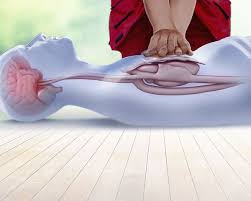
CPR physically maintains vital blood flow to the brain and organs during cardiac arrest. By applying rhythmic chest compressions, a rescuer acts as an artificial pump to delay cellular death. Learning this biological mechanism through certified training empowers everyday people to effectively intervene in life-threatening medical emergencies.
How does pushing on a chest actually help?
Ever wondered what really keeps us ticking? It’s not just a poetic heartbeat; it’s a delicate, biological balance of oxygen, pressure, and electrical impulses. When that system crashes during sudden cardiac arrest, human physiology gives us a very small window to fix it.
This is why understanding the mechanics behind chest compressions is so critical. By getting certified through C2C First Aid, you aren’t just memorizing steps on a checklist. You are learning how to become a human life-support machine until the paramedics arrive.
Think of the heart as a mechanical pump. When it stops, the pipes (your blood vessels) go completely still. Oxygen-rich blood gets trapped, and the brain starts to starve. By pushing hard and fast in the center of the chest, you are physically squeezing the heart between the breastbone and the spine. This forces blood out and up into the brain. When you release, the chest recoils, creating a vacuum that pulls fresh blood back into the heart. It’s pure physics working together with anatomy.
Why is the “blended learning” approach scientifically sound?
We know from cognitive science that humans just don’t retain information well after sitting in a rigid classroom for 16 straight hours. We get tired, and our attention spans eventually fry. The blended model respects how adult brains actually process and encode new information.
You absorb the theory—like the neurological signs of a stroke or the circulatory failure seen in shock—online at your own pace. Then, you step into a facility to build literal muscle memory. Your brain maps the physical sensation of a proper chest compression without the heavy fatigue of an all-day lecture.
What role does an AED play in the chain of survival?
An Automated External Defibrillator (AED) sounds like a complicated piece of hospital tech, but it’s remarkably simple. While CPR keeps the blood moving, compressions rarely restart a stopped heart on their own. Usually, the heart’s electrical system is misfiring, causing the muscle to quiver uselessly like a bowl of gelatin.
An AED delivers a precise, calculated electrical shock to “reset” the heart’s pacemaker cells. It wipes the slate clean. This brief interruption gives the heart’s natural electrical system a fighting chance to find its normal rhythm again.
Can anyone learn these medical techniques?
Yes, and you don’t need a medical degree to pull it off. The steps are designed to be universally understood. When you are under intense stress, your body dumps adrenaline, which severely limits your complex decision-making skills.
Proper training builds a neurological shortcut. You see someone collapse, and your hands just know what to do without overthinking the science behind it.
If you are looking for first aid training near Richmond Row, Victoria Park, or other areas close to the intersection of Richmond St and Oxford St, then you may reach out to Coast2Coast First Aid/CPR – London in that area. For more info and articles like this visit: https://www.c2cfirstaidaquatics.com/
FAQs About the Science of First Aid
1. How fast should I perform chest compressions? The biological sweet spot is 100 to 120 beats per minute. A fun, scientifically proven trick is to push to the beat of “Stayin’ Alive” by the Bee Gees to maintain the correct rate.
2. Can I break a rib doing CPR? Yes, it actually happens quite often. Ribs can heal, but brain death is permanent. Never let the fear of cracking a rib stop you from providing life-saving compressions.
3. How long does it take for brain damage to occur without oxygen? Irreversible brain damage begins to set in within just 4 to 6 minutes after the heart stops. This tight timeframe makes immediate bystander intervention absolutely crucial.
4. Do I have to do mouth-to-mouth breathing? Not necessarily. If you aren’t comfortable or don’t have a barrier mask, hands-only CPR (continuous chest compressions) is highly effective for adults because it keeps the remaining oxygen in the blood circulating.
5. What is the recovery rate for sudden cardiac arrest? Survival rates drop by about 10% for every minute without CPR and an AED. Early intervention can double or even triple a victim’s chance of survival.
Leave a Reply