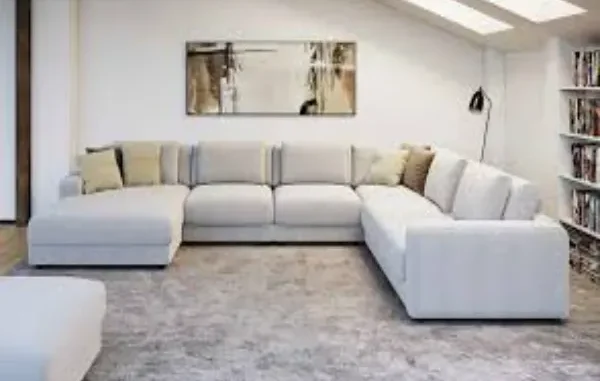
Open-plan apartments look generous on the floor plan, but in real life they can feel a bit like a blank stage: the kitchen is on one side, a dining table somewhere in the middle, and then a big undefined zone where “the sofa will go”. A U-shaped sofa is one of the easiest ways to give that empty space a clear centre without building walls or adding bulky room dividers. By wrapping seating around three sides, it naturally creates a living room “island” inside the larger space. People instinctively understand where to sit, where to put a coffee cup, where to face for conversation or movie nights.
Unlike a standard three-seater, a U-shaped configuration gives you at least one chaise or extended section for stretching out, plus an extra return that can face the kitchen or dining area. That means you can talk to someone cooking at the kitchen island and still keep an eye on a film or on children playing on the rug. In open-plan living, this kind of 360-degree communication is priceless. A U-shaped sofa is also visually strong: its continuous line of upholstery anchors the centre of the room in a way that single pieces or scattered chairs rarely do. With the right proportions, it can make even a large loft feel calm and pulled together.
Three smart U-shaped layouts for open-plan living
One of the simplest layouts is the “island” U-shape. Place the longest side of the sofa parallel to the TV wall or media unit, with the open side facing towards the kitchen. The two returns create a soft frame around an area rug and coffee table, and the back of the sofa becomes a subtle boundary between living area and circulation space. You can place a slim console table behind one side for lamps and books, which keeps the apartment airy while clearly zoning the lounge corner. This layout works especially well when you want the living zone in the centre of the room, not pushed against a wall.
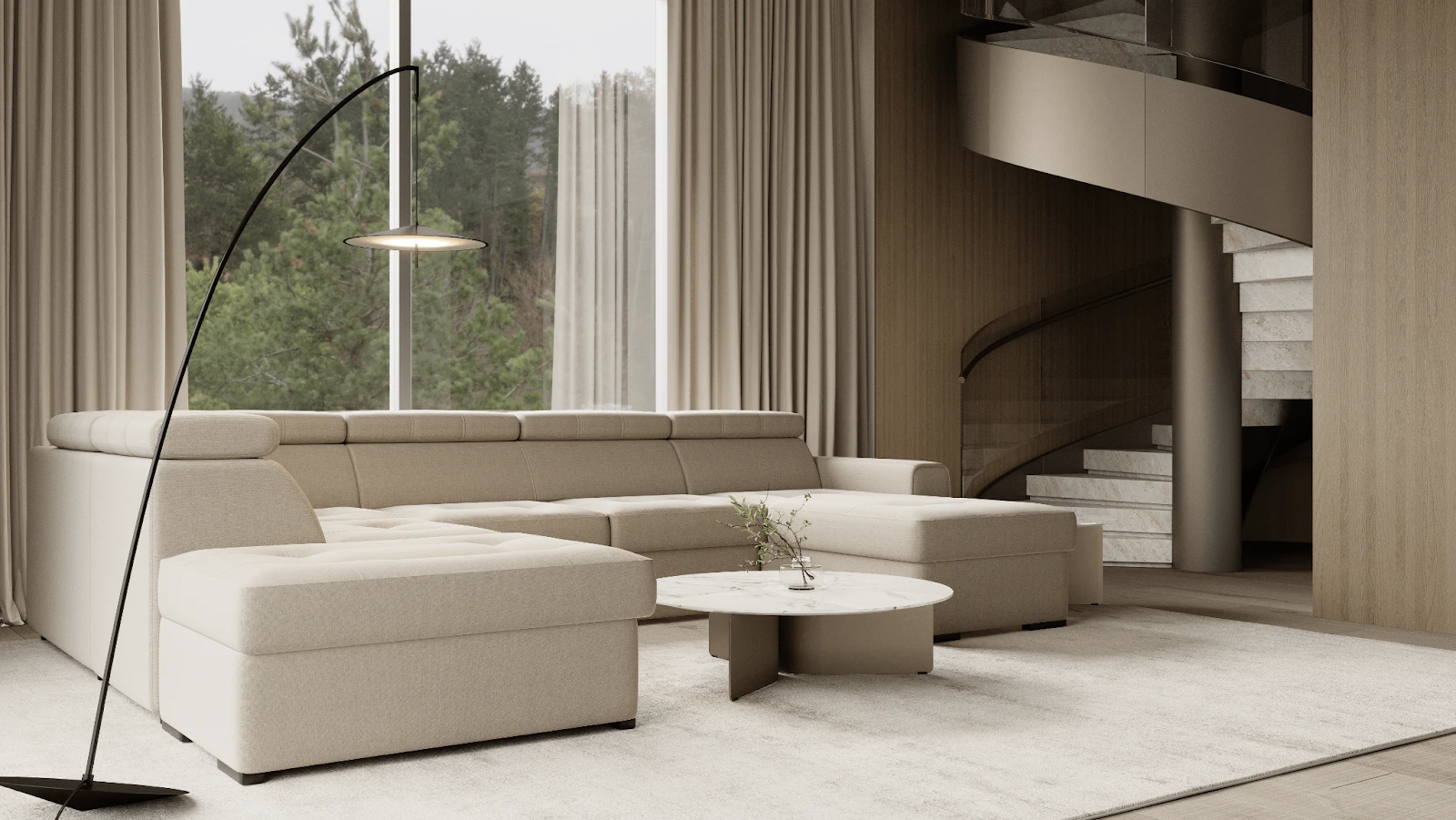
The second option is the “corner anchor” U-shape. Here the long side of the sofa sits against a wall, usually under windows, while the two returns stretch out into the room. This is ideal for apartments where one corner naturally feels like the quiet end of the space. By tucking the U-sofa into that corner, you free up the middle of the room for a dining table, a desk or children’s play area, but still have generous seating for guests. The inside of the U becomes the cosiest spot in the home: you can add a floor lamp behind one end and a nesting table beside the other to turn it into a reading nook, while the wall behind the backrest is perfect for large art or a soft textured panel.
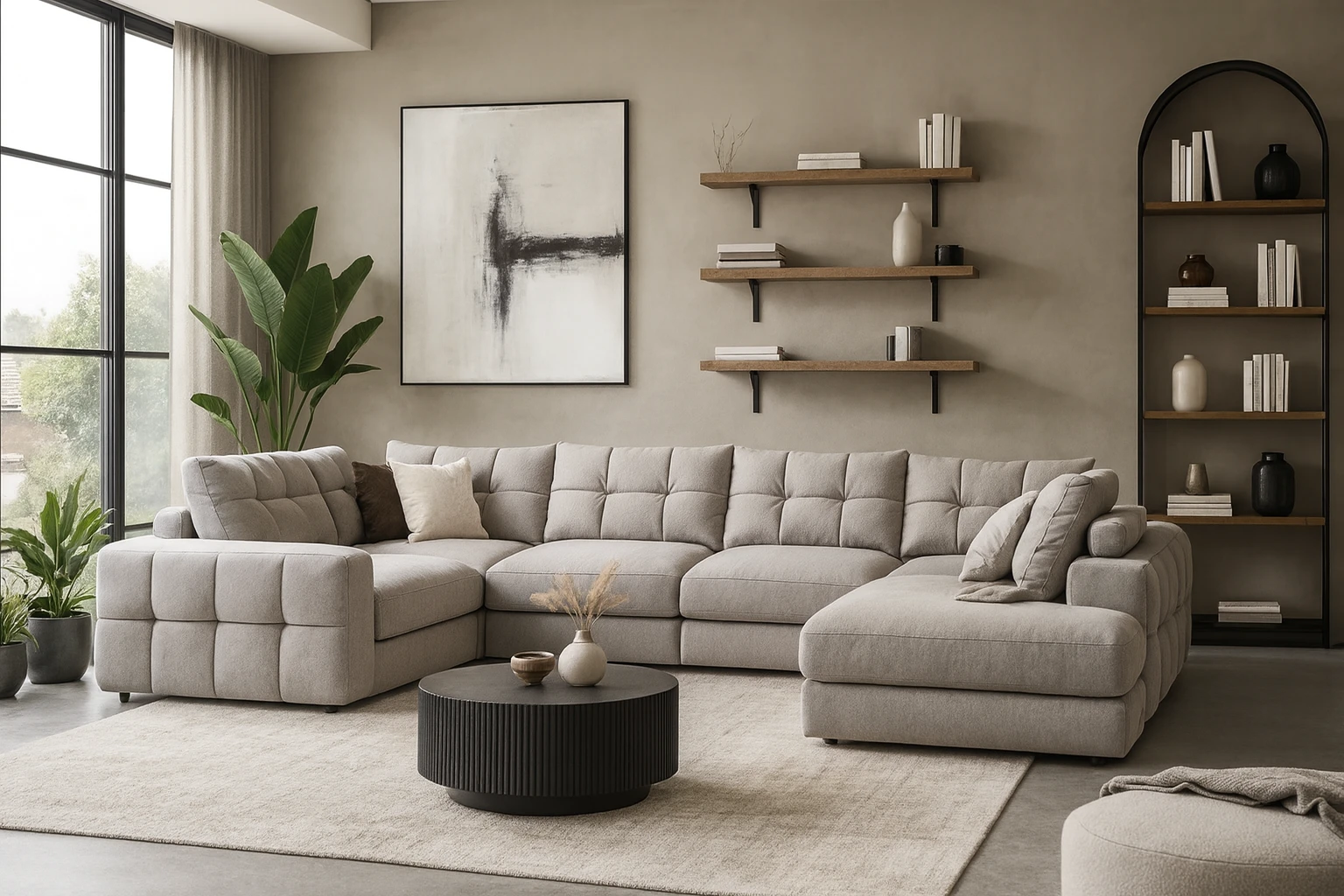
The third idea is a “hybrid” layout that works with a dining area. Place the U-shaped sofa so that one of its shorter sides runs parallel to the dining table. In many Blest interiors this side is finished almost like a bench, with clean lines and comfortable but upright back cushions. That end of the sofa can visually echo banquette seating and makes the living and dining areas feel related, not separate. The rest of the U still wraps around the coffee table for lounging, while the side facing the kitchen keeps conversation open during cooking. A small pouf or upholstered bench can float near the inner corner, ready to move between table and sofa depending on how many guests arrive.
Styling and living with a U-shaped sofa in a real apartment
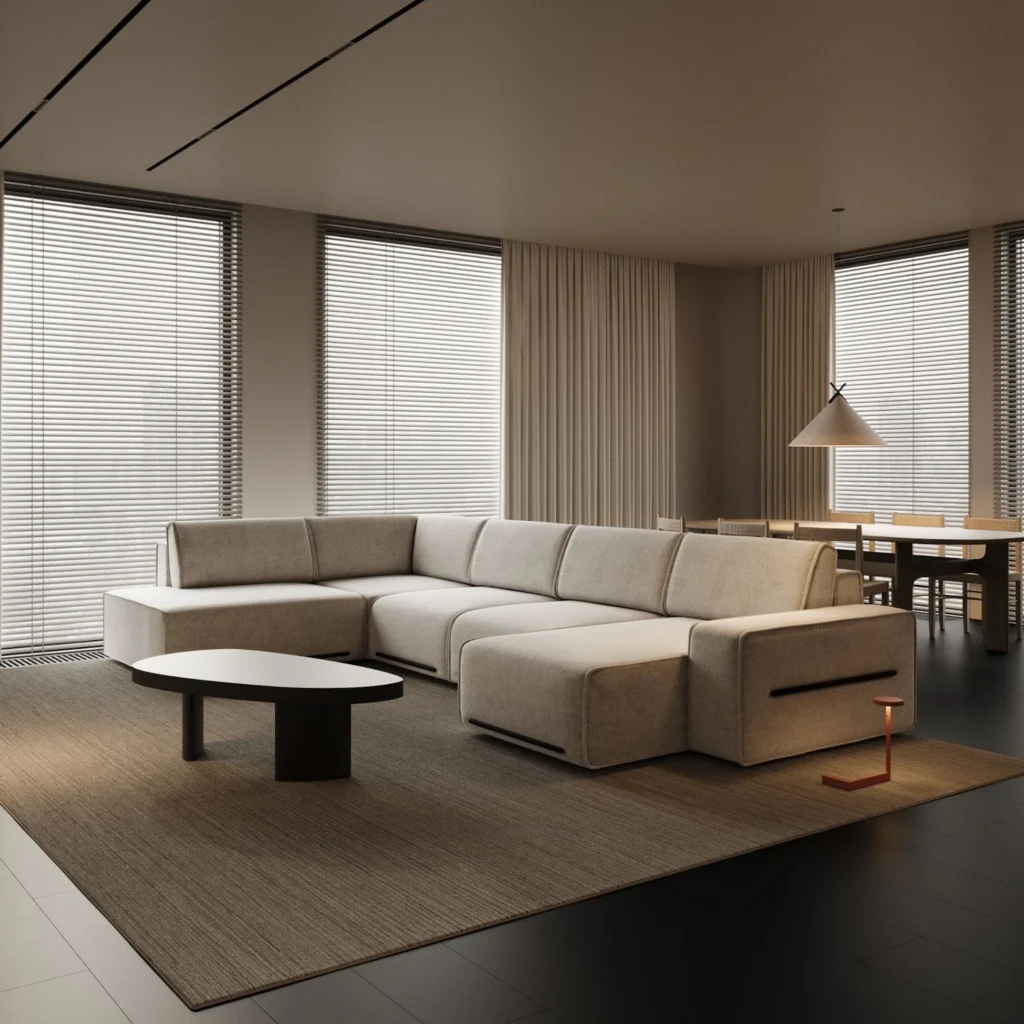
Once the layout is set, the details will decide whether your open-plan apartment feels like a magazine spread or a space you truly live in. Start with a rug that fits the U rather than a tiny piece lost in the middle; ideally the front legs of all sections sit on the rug so the sofa, table and side pieces read as one area. A low, wide coffee table is easier to reach from every seat than a narrow one, and in deeper U-shapes two smaller tables can work better than one large block. If you choose a light neutral fabric – something many Blest sofas do beautifully – balance it with warmer textures around: a wooden media unit, soft curtains, a textured throw and a couple of darker cushions to ground the palette.
Lighting also plays a big role in open-plan layouts. A pendant above the coffee table or a pair of slim floor lamps at the outer corners of the U helps to “frame” the living zone when the rest of the apartment is dimmed at night. In daytime, the same sofa can feel almost like part of the architecture if the colour is close to the wall and floor tones. Storage is another practical question; instead of extra cabinets, think about side tables with shelves, an upholstered bench with hidden storage behind the sofa, or even a low media unit that doubles as a place for baskets and books.
Most importantly, treat the U-shaped sofa as the social heart of the apartment. It’s where children spread out with toys, where friends sit in a circle instead of a line, where one person lies with a laptop while another reads at the opposite end. In a good open-plan layout, the sofa doesn’t fight the kitchen and dining zone for attention; it quietly organises them. With carefully chosen proportions, fabrics and accessories, a U-shaped sofa from a collection like Blest’s can turn a large, echoing room into a series of connected, human-scale places to sit, talk, eat and simply be at home.
Leave a Reply