Purity as a critical parameter in laser cutting
Laser cutting has become one of the most precise and productive metal fabrication processes available. Achieving consistent, high-quality results depends on a combination of factors: laser power, focus, cutting speed and the properties of the assist gas used during the cut. Of these, the assist gas is often underestimated as a variable. In nitrogen-assisted laser cutting, purity is not a secondary consideration but a fundamental specification that directly determines cut quality, edge finish and operational efficiency. For a comprehensive overview, everything about nitrogen for laser cutting is covered in detail on Presscon’s metal fabrication page. Understanding the role of purity is essential to getting the most out of a laser cutting operation.
How nitrogen functions as an assist gas in laser cutting
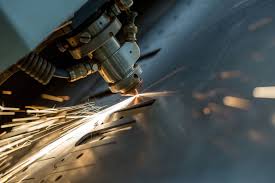
In laser cutting, an assist gas is directed coaxially through the cutting head onto the workpiece alongside the laser beam. The gas serves two primary functions: it removes molten material from the kerf and it protects the cut zone from atmospheric contamination. The choice of assist gas determines whether the cutting process is inert or reactive.
When oxygen is used as the assist gas, it reacts exothermically with the metal, adding energy to the cutting process and increasing cutting speed. However, this reaction also produces an oxide layer on the cut edge, which can affect surface finish, weldability and coating adhesion. Nitrogen, being an inert gas, does not react with the metal. It removes the melt purely by kinetic force and shields the cut zone from oxygen in the surrounding atmosphere, producing a clean, oxide-free edge. This makes nitrogen the preferred assist gas wherever edge quality and downstream processing requirements are demanding.
What happens when nitrogen purity is insufficient
When nitrogen purity falls below the level required for a given application, oxygen and other reactive gases remain present in the assist gas stream in quantities sufficient to cause oxidation at the cut edge. Even small concentrations of oxygen, measured in parts per million, can produce visible discolouration on stainless steel and leave a thin oxide layer on aluminium and other non-ferrous metals.
The consequences extend beyond aesthetics. Oxidised cut edges can reduce weld quality if the cut parts are subsequently welded, as oxide inclusions compromise joint integrity. Coating adhesion on painted or powder-coated parts can be affected, leading to premature failure of surface treatments. In precision applications where tight tolerances and clean surfaces are required, insufficient nitrogen purity introduces variability that is difficult to control and costly to correct.
Purity requirements by material type
Different materials respond differently to nitrogen purity levels, and understanding these differences is essential for specifying the right nitrogen supply for a given operation.
Stainless steel is the most demanding material in terms of nitrogen purity requirements. To achieve a bright, oxide-free edge on stainless steel, nitrogen purity levels of 99.99 percent or higher are typically required. Lower purity levels result in a straw or blue discolouration of the cut edge, which is characteristic of surface oxidation. For applications where the stainless steel will be visible in the finished product or will undergo further surface treatment, this discolouration is unacceptable.
Aluminium and aluminium alloys require high purity nitrogen to prevent oxidation, though the sensitivity is somewhat lower than stainless steel. Purity levels of 99.9 percent are generally sufficient for most aluminium cutting applications, though higher purity may be required for thin gauge material or applications with stringent surface requirements.
Mild steel is less sensitive to nitrogen purity when cut with oxygen, but when nitrogen is used as the assist gas for mild steel, typically to avoid the heat-affected zone associated with oxygen cutting, purity requirements are similar to those for stainless steel.
How purity level affects cut speed and edge quality
The relationship between nitrogen purity and cutting performance is not limited to edge quality. Purity also has a measurable effect on cut speed. At higher purity levels, the absence of reactive contaminants in the gas stream allows the cutting process to proceed without interference from oxidation reactions at the kerf. This enables higher cutting speeds while maintaining the required edge quality.
Conversely, when purity is marginal, operators often compensate by reducing cutting speed to minimise the oxidation that occurs at the cut edge. This reduces throughput and increases operating costs per part. The economic case for maintaining the correct purity level is therefore not only about quality but also about productivity and cost efficiency.
Pressure consistency is closely related to purity in determining cut quality. Fluctuations in gas pressure during cutting affect the efficiency of melt removal from the kerf. A nitrogen supply system that delivers consistent pressure at the required purity throughout a production run produces more uniform results than one subject to pressure variation or purity drift.
Choosing the right nitrogen supply for your purity requirements
Nitrogen for laser cutting can be supplied from cylinders, bulk liquid tanks or an on-site nitrogen generator. Each supply method has implications for purity consistency, cost and operational flexibility.
Cylinder and bulk liquid supply deliver nitrogen at a specified purity, but purity can vary between deliveries and supply interruptions can affect production continuity. On-site nitrogen generation offers the advantage of continuous, consistent production of nitrogen at a controlled purity level. PSA-based nitrogen generators are capable of delivering purity levels of up to 99.999 percent, making them suitable for the most demanding laser cutting applications. The purity output of a well-maintained generator is stable and controllable, providing a reliable foundation for consistent cutting performance.
When selecting a nitrogen supply solution, it is important to specify purity requirements based on the materials being cut and the quality standards required by the application, rather than selecting a standard purity level and hoping it will suffice.
Purity is not a variable, it is a specification
In nitrogen-assisted laser cutting, purity is a fixed process parameter, not a variable to be optimised after the fact. The correct purity level for a given material and application must be identified at the outset and maintained consistently throughout the production process. Insufficient purity leads to oxidised edges, reduced weld quality, compromised surface treatments and lower cutting speeds. A nitrogen supply solution that delivers the specified purity reliably and continuously is a prerequisite for achieving consistent, high-quality results in laser cutting operations.
Leave a Reply