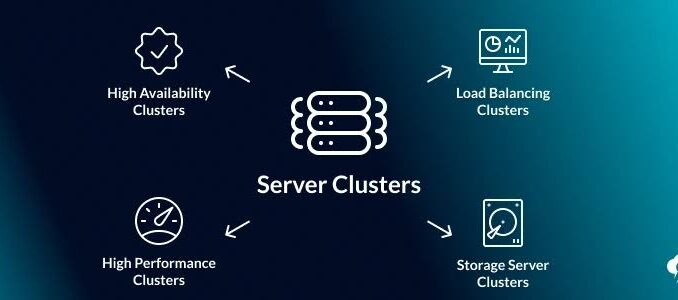
A server cluster is a group of two or more servers that work together as a single system, so if one node fails, another instantly picks up the load and your services stay online. For any business where downtime means lost revenue, like ecommerce, SaaS, streaming, or a busy database, that built-in redundancy is the difference between a brief hiccup and an outage that costs you customers.
Clustering also spreads traffic across nodes through load balancing, which keeps performance steady during spikes and lets you scale by adding servers rather than replacing them. The trade-off is that clusters are more complex and more expensive than a single server, so the provider you choose matters. These four are the ones worth shortlisting in 2026, each with a different approach to clustering.
What to look for in a cluster provider
Clusters live or die on the details. These are the factors that separate a strong cluster provider from a weak one:
- High availability and failover: automatic detection and rerouting so a single failure never takes the whole system down.
- Private networking: a fast, isolated network between nodes for secure, low-latency communication.
- Load balancing and scalability: the ability to distribute traffic and add nodes as you grow.
- Management model: whether you architect and run the cluster yourself or hand it to a managed team.
- Uptime, support, and pricing: a strong SLA, responsive support, and transparent costs for a multi-server setup.
Quick comparison
Here is how the four providers compare at the time of writing. Configurations and pricing change often, so confirm current details directly with each provider before committing.
| Provider | Cluster approach | Key strength | Best for |
|---|---|---|---|
| ServerMania | Pre-built and custom cluster packages | Turnkey high availability with a 100 percent network uptime SLA | Businesses that want a ready-to-go or custom cluster |
| OVHcloud | DIY clusters over the vRack private network | Private bandwidth up to 50 Gbps and multi-AZ design | Technical teams building large clusters across data centers |
| Liquid Web | Fully managed cluster hosting | The provider designs, deploys, and runs the cluster for you | Teams that want clustering handed off end to end |
| phoenixNAP | Automated Kubernetes clusters on bare metal | One-click HA Kubernetes via Bare Metal Cloud and Rancher | DevOps teams running containerized workloads |
1. ServerMania: Best for turnkey and custom clusters
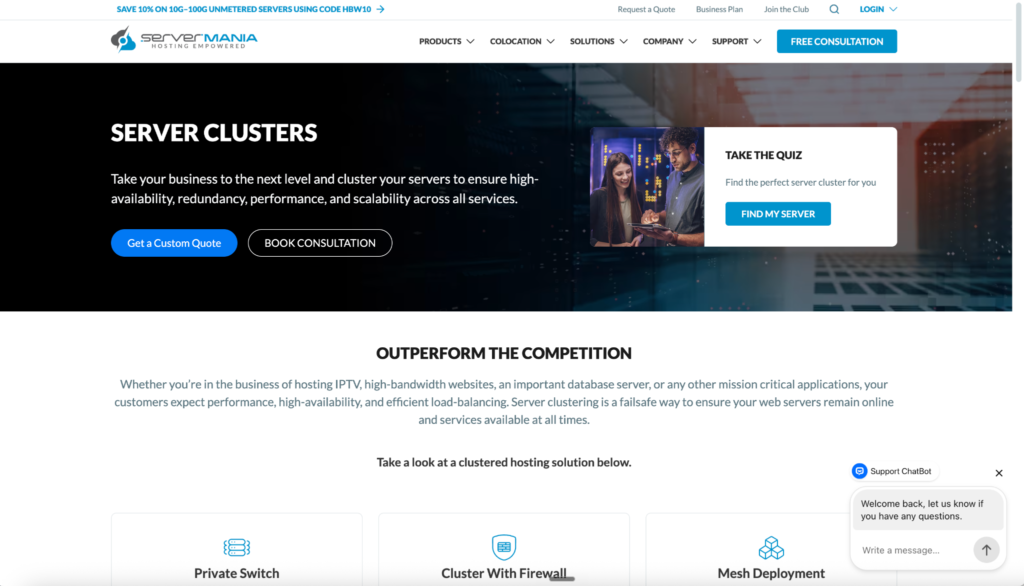
ServerMania takes the complexity out of clustering with pre-built packages you can deploy as-is or customize. The Private Switch cluster starts at 538 dollars per month, the Cluster With Firewall adds a pfSense firewall server from 707 dollars per month, and the four-node Mesh Deployment starts at 1,414 dollars per month. Each is built on AMD Ryzen 5950X nodes with 64 GB of RAM and 1 TB NVMe storage, linked by a 1 Gbps or 10 Gbps private switch with a /28 IP range and free setup.
Clusters scale to 512 GB or more of RAM and up to 20 Gbps network speeds, backed by a 100 percent network uptime SLA, ultrafast SSD storage, and personalized 24/7 support across global data centers. Every deployment is optimized for high availability, load balancing, and scalability, with managed services and remote hands available at most locations. For most businesses, ServerMania’s server cluster hosting is the most approachable way to get a production-ready cluster without architecting one from scratch.
Best for: businesses that want a ready-to-go or lightly customized high availability cluster with hands-on support.
2. OVHcloud: Best for building clusters at scale
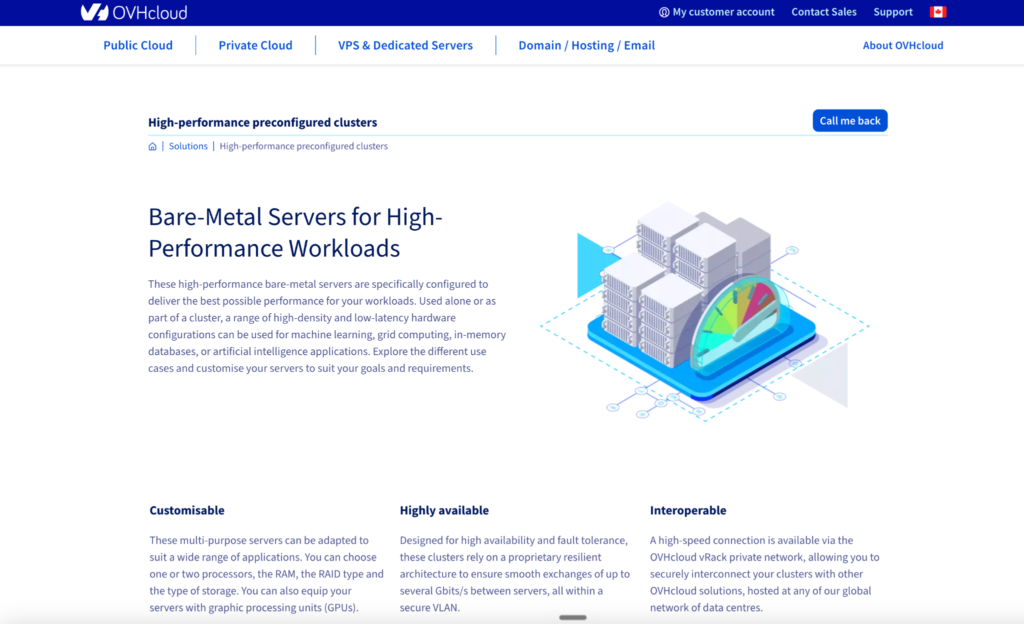
OVHcloud is the pick for teams that want to architect their own clusters across data centers. Its vRack private network, included free with most dedicated servers, lets you link any number of servers into an isolated cluster, with private bandwidth up to 4 x 25 Gbps and as high as 50 Gbps on the High Grade range. You can also create thousands of private VLANs and connect clusters to OVHcloud’s public or hosted private cloud for hybrid setups.
The platform is built for high availability and fault tolerance, with a multi-availability-zone architecture that supports cross-zone replication and seamless failover, plus redundant power, water cooling, and ISO 27001 certification. Server ranges like Advance, Scale, and High Grade are designed with clustering in mind. The main consideration is that these deployments are unmanaged by default, so you run the stack yourself.
Best for: technical teams building large, custom high availability clusters across regions or into a hybrid cloud.
3. Liquid Web: Best for fully managed clusters
Liquid Web is the choice when you want clustering handed off entirely. Its managed cluster hosting is custom-designed around your use case, whether that is a web cluster with a web front-end and database back-end, an application cluster with dedicated processing nodes, or a secure cluster with a hardware firewall and VPN. Liquid Web architects, deploys, and runs the whole thing for you.
Solutions include load balancing, real-time data replication, failover, redundant storage, and proactive monitoring, all backed by a 100 percent network uptime guarantee and the company’s 24/7/365 in-house support. If you need a cloud-based cluster instead, its private cloud platform covers that. For teams without a deep infrastructure bench, that managed approach removes most of the risk from running a cluster.
Best for: businesses that want a provider to design, deploy, and manage a high availability cluster end to end.
4. phoenixNAP: Best for automated, containerized clusters
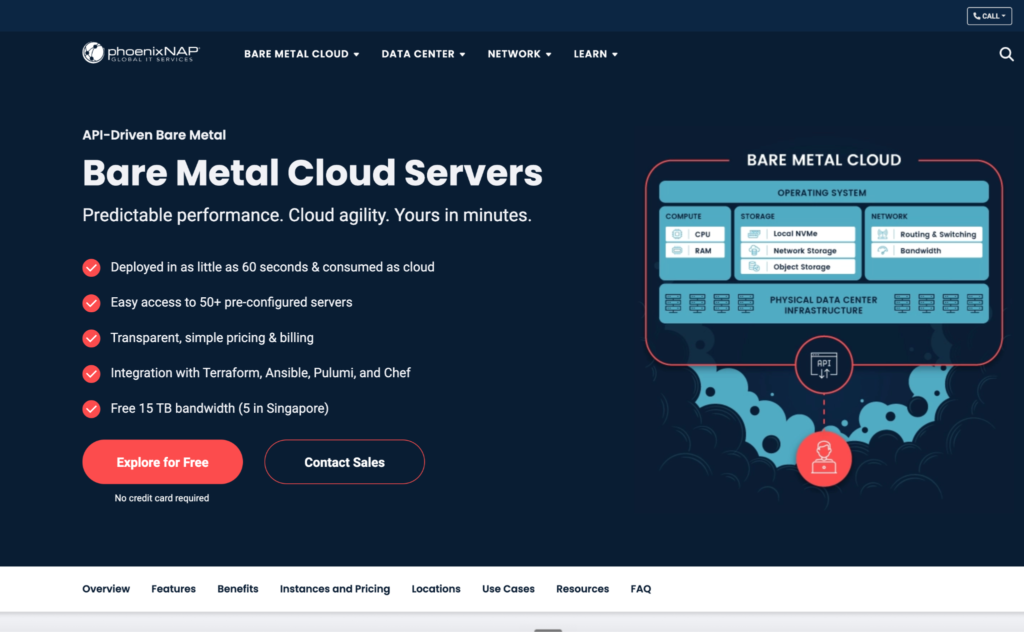
phoenixNAP suits DevOps teams running containers. Through its Bare Metal Cloud platform and SUSE Rancher integration, you can deploy highly available multi-node Kubernetes clusters, both management and workload clusters, in minutes using the portal, API, CLI, or kubectl. Nodes can sit in the same or different locations on a private backend network, with the goal of a Kubernetes setup that has no single point of failure.
Because servers are single-tenant with no hypervisor overhead, performance stays consistent, and infrastructure-as-code tools like Terraform and Ansible make deployments repeatable. Selected instances offer up to 50 Gbps of network capacity with 20 Gbps of free DDoS protection and 15 TB of free bandwidth shared per location, with flexible hourly or reserved billing. It is built for speed and automation rather than hand-holding.
Best for: DevOps and engineering teams that want automated, container-ready high availability clusters on bare metal.
How to choose the right provider
The best cluster provider depends on how much you want to build and manage yourself. If you want a turnkey or lightly customized cluster with strong support, ServerMania is the most approachable starting point. OVHcloud is the choice for building large clusters across data centers, Liquid Web is the pick when you want the cluster fully managed for you, and phoenixNAP is built for DevOps teams running automated Kubernetes workloads.
Before committing, map the provider to your team’s skills and your uptime requirements, confirm the private networking and failover details, and check whether the deployment is managed or self-run so the support expectation is clear. Because cluster pricing and configurations vary widely, always validate the current quote and architecture directly with the provider.
Final thoughts
A server cluster is one of the most effective ways to keep mission-critical services online and performing under load, and the four providers here each make that achievable in a different way. Match the approach to your team and workload, confirm the high availability details, and start with a design that fits your real traffic. Get it right and clustering turns uptime from a worry into a competitive advantage.
Leave a Reply