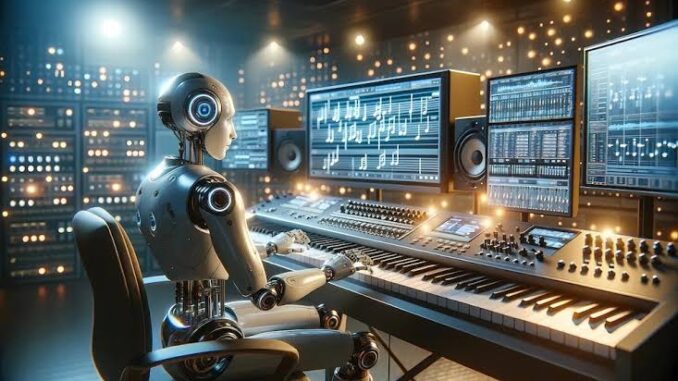
Digital content used to be discussed mostly through visuals. Better cameras, sharper edits, cleaner thumbnails, faster rendering, more realistic effects. Sound was there, of course, but it often arrived late in the process.
A video would be nearly finished before someone asked what music should go under it.
That habit is starting to change. AI tools have made it easier for creators to think about music earlier, not as a final layer added at the end, but as part of the creative plan itself. The shift is not only about speed. It is about how sound shapes the way people understand a piece of content.
For videos, podcasts, games, short ads, tutorials, and social posts, music does more than fill silence. It tells the viewer how to feel before a sentence is finished.
Music Is Becoming Part of the Content Brief
Most people notice bad music faster than good music. A track that is too loud, too dramatic, or too generic can make a polished video feel unfinished. A quiet tutorial can suddenly feel like a movie trailer. A product demo can feel heavier than it should. A short social clip can lose energy before the main point arrives.
That is why sound is becoming part of the early brief for more creators.
Instead of asking only what the video should show, teams now have to ask what it should sound like. Is the tone calm, fast, bright, tense, warm, playful, serious, or clean? Does the music need to stay behind narration? Should it build slowly, or should it catch attention right away?
These are creative questions, but they are also practical questions. Once the sound is wrong, the edit often feels wrong too.
Why Searching for the Right Track Can Slow Everything Down
Traditional music selection usually starts with a search. A creator opens a stock library, types in a mood or genre, listens through a long list, saves a few options, and tries them against the edit.
That process works, but it can become tiring.
The track may have the right mood but the wrong pace. It may start well and become too busy after twenty seconds. It may fit the intro but not the middle. It may sound fine by itself and still compete with the voiceover.
This is where an AI music generator changes the workflow. The creator can start with the job the track needs to do. A clean background bed for a product walkthrough. A soft intro for a podcast. A short energetic loop for a mobile game prototype. A simple instrumental for a study video.
The important part is not that AI replaces taste. It does not. The useful part is that it gives creators a faster way to test sound against the actual purpose of the content.
AI Music Fits the Way Modern Content Is Made
Modern content is rarely one big project. It is usually many small versions.
A creator may publish a long video, then cut it into short clips. A business may turn one product demo into a website video, a paid ad, a social post, and a webinar segment. A podcaster may need intro music, transition cues, and short background beds for clips.
In that kind of workflow, one track is often not enough. Creators need variations. They need shorter pieces, quieter pieces, cleaner pieces, or tracks that match different parts of the same idea.
This is one reason AI music tools feel different from a normal music library. They are not only places to find finished tracks. They can become a drafting tool for sound.
The first result may not be the final one. That is normal. A draft can still answer a useful question: does this kind of sound fit the project?
Sound Can Change the Meaning of the Same Visuals
Anyone who has edited even a simple video knows this. Keep the same image and change the music, and the whole scene feels different.
A slow piano track can make a clip feel reflective. A light beat can make the same clip feel casual. A tense electronic sound can make it feel serious or technical. The image has not changed, but the viewer reads it differently.
This matters for digital communication. A tutorial does not need the same sound as a launch teaser. A healthcare explainer does not need the same sound as a gaming clip. A brand story does not need the same music as a quick product comparison.
Sound is not decoration. It is part of the message.
That is also why tools like CraftMusic AI make sense in the wider AI content stack. Creators are already using AI for writing, images, editing support, and planning. Music is simply becoming another layer that can be shaped around the project instead of chosen at the last minute.
The Human Decision Still Matters
There is a simple trap with AI music. Because generating options is easier, people may assume choosing the right one is also easier.
It is not always that simple.
A track still has to be judged by a person. Does it support the voiceover? Does it distract from the message? Does it feel too dramatic for the topic? Does it make the content sound cheaper, heavier, or more emotional than intended?
The creator still makes those calls.
AI can help create options, but it cannot know the full context of the audience, the brand, the scene, or the emotional tone the creator is aiming for. That judgment is still human work.
Where AI Music Works Best
AI-generated music is especially useful when the creator has a specific use case.
That may be a background track for a tutorial, a short loop for a prototype, a mood sketch for a pitch, or a draft bed for a social video. The more clearly the creator understands the content, the easier it is to decide whether the music works.
It is less useful when the prompt is vague. Asking for something that just sounds cool usually produces something hard to judge. Asking for music that supports a calm product walkthrough gives the tool a clearer job.
This is the same pattern seen across many AI tools. The output gets better when the input has a real purpose.
A New Layer in Creative Technology
AI music generation is not just about making songs faster. For digital creators, the larger change is that sound can now be explored earlier and more often.
That may sound like a small shift, but it changes the rhythm of production. A creator can test an idea with music before the final edit. A team can compare tones before committing to a campaign direction. A game designer can try a loop while the prototype is still rough.
The music becomes part of the thinking process.
Digital content is becoming more layered. Text, visuals, motion, voice, music, and interaction all shape the final experience. The tools that matter most are the ones that help creators make those layers work together.
AI music generators are part of that change. Not because every project needs machine-made music, and not because human taste is becoming less important. The real shift is simpler than that.
Creators now have a faster way to hear what an idea could become.
Leave a Reply