
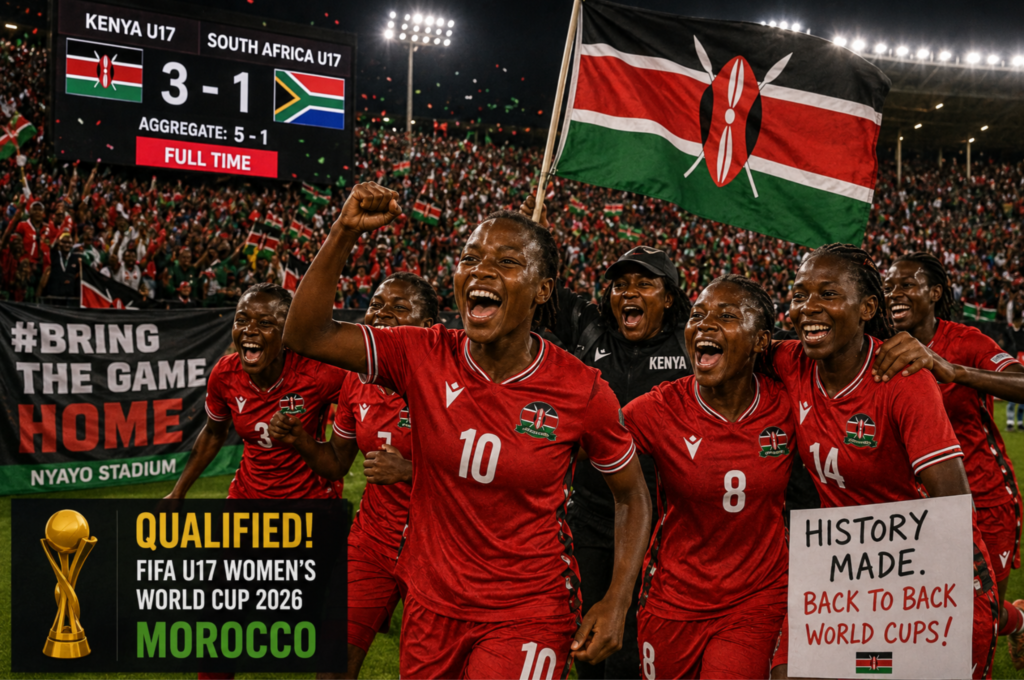
On Sunday evening, the whole of Kenya held its breath. 15,000 spectators at Nyayo, millions glued to their screens, heated debates on social media and fan platforms like 888starz casino – everyone was waiting for one thing: would the Junior Starlets confirm their World Cup ticket? And just five minutes in, the stadium took a blow.
The stadium was just starting to warm up when South Africa scored. Guest captain Katleho Malebana capitalised on a defensive error and slotted the ball past Michelle Okoyo. The away fans erupted. The home crowd fell silent.
The scoreboard read 1‑0 to South Africa. The aggregate stood at 2‑1 to Kenya. One more goal, and we would have been heading home with a nail‑biter. In the first leg in Pretoria, our girls won 2‑0, but that advantage was melting away before our eyes.
I sat in the stands that Sunday. Around me, 15,000 Kenyans held their breath. South Africa pressed hard, pinning the Junior Starlets in their own half until half‑time. One moment – and anything could have happened.
But this team has character.
How They Turned the Game Around
Coach Mildred Cheche found the right words in the dressing room. The message was simple: you’re at home, this evening is yours. She later admitted that the girls were scared at first. They weren’t used to playing in front of a full stadium. But in the second half, a completely different team stepped onto the pitch.
On 70 minutes, Gaudencia Maloba rose above the defence and powered a header into the net – 1‑1 on the day. The aggregate score became 3‑1. Nyayo exploded. Kenya could breathe again.
Then came a penalty. A rough foul in the box. Brenda Awor kept her cool and converted – 2‑1 on the scoreboard, 4‑1 on aggregate. A couple of minutes later, substitute Elizabeth Alizeba picked up the ball in midfield, drove past three defenders, and slotted it into the corner – 3‑1.
That was it. South Africa were broken. Kenya won 3‑1 on the night and 5‑1 over two legs.
The stands turned into a carnival. Strangers embraced. Someone nearby was crying – not from grief, but from joy.
A Story Written Twice
In 2024, the Junior Starlets became the first Kenyan football team – men’s or women’s – to play at a World Cup. In the Dominican Republic, they were the underdogs. But they left with a historic win over Mexico (2‑1) and the love of an entire nation.
Now they’re going again. A second World Cup in a row. No Kenyan team has ever done that before.
And Cheche became the first coach in Kenya to lead a national team to two different World Cups. Not bad for a woman who fought for recognition for years in a country where women’s football still receives less attention and funding.
What They Will Face in Morocco
The tournament runs from 17 October to 7 November 2026 in Morocco. Kenya have been drawn into Group E alongside China, the United States, and Samoa.
The group is brutal. The USA are perennial powerhouses at this age level. China have a rich history. Samoa are the only team where Kenya might realistically aim for points.
The Starlets’ schedule is as follows:
- 19 October – China (Women’s Football Complex, Pitch 1)
- 22 October – USA (same venue)
- 25 October – Samoa (same venue)
The goal is clear: become the first Kenyan team to advance from the group stage at a World Cup. We’ve never managed it before.
The Whole Country Cheered for Them
The #BringTheGameHome campaign worked a treat. Nyayo was packed to capacity. Fans came from Kisumu and Mombasa. Some slept outside the stadium gates to get tickets.
Former Nairobi Governor Mike Sonko arrived with one million shillings as a gift for the team. President Ruto invited the girls to breakfast at State House. Senior women’s national team coach Beldine Odemba called on the government and FKF to invest properly in preparation.
“Congratulations to Cheche, the entire technical bench, and the players,” Odemba said. “They’ve put in a lot of work, and it has paid off.”
But she also worries. News of delayed payments to players keeps surfacing. Odemba demands regular camps, international friendlies, and a development system starting from U‑13 level. “We can become a very competitive country in women’s football if we invest correctly,” she emphasised.
Why This Matters Beyond Sport
This isn’t just about football. It’s about who these girls inspire.
Every time Maloba wins an aerial duel, every time Awor steps up to take a penalty, every time Alizeba dribbles past a defender – they prove that Kenyan women deserve the big stage. They show girls across the country that football isn’t just for men.
In a country where women’s sport is chronically underfunded and overlooked, that’s a huge step.
And there’s more. Kenyan fans love winners. Right now, this team is winning. People who previously didn’t care about women’s football are already planning watch parties for the matches in Morocco. Local businesses are eyeing sponsorship. The conversation has shifted.
What’s Next?
Cheche knows there’s still work to be done. Against South Africa, her players struggled to keep possession for long stretches, especially during the tense first half. That won’t work against the USA and China.
But this is a young team. Most of the girls are still in school. They are learning and growing. And they’ve already proven they can handle pressure.
“We prepare for every scenario before each game,” Cheche said ahead of the South Africa match. “We prepare for a draw, a defeat, and a win. But this time, we were only focused on winning.”
She got her win. Now she has three months to prepare for the biggest tournament of her career.
Morocco, here we come. For the second time in two years. And somehow, it feels even bigger this time around.
Leave a Reply