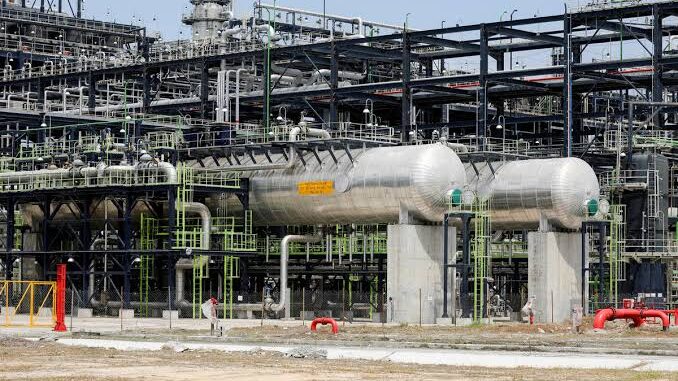
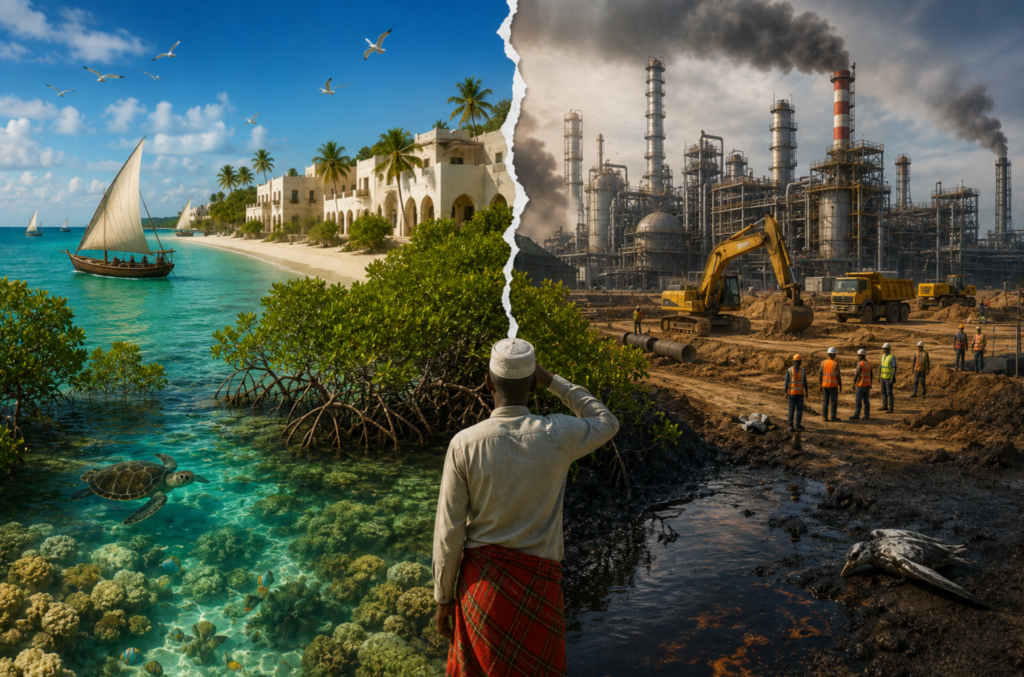
The silence of Lamu has been broken by the sound of bulldozers. Oil giant Aliko Dangote has chosen this location for his new refinery. Local residents don’t yet know whether to celebrate or fear. And environmentalists are already raising the alarm.
While Kenyans discussed the news on social media, at markets, and while watching matches through 888bet app, a conflict was brewing on the Indian Ocean coast. On one side – President Ruto, promising 60,000 jobs. On the other – Greenpeace, warning of an environmental catastrophe.
What Is the Project and Who Is Building It
Aliko Dangote is the richest man in Africa. He has already built a massive oil refinery in Nigeria. Now he wants to repeat that success in Kenya.
Here are the project’s key figures:
| Parameter | Value |
| Investment | $15–17 billion (~2.2 trillion shillings) |
| Capacity | 700,000 barrels per day |
| Construction timeline | 30–36 months |
| Jobs | 60,000 (according to the president) |
| Location | Lamu, Kenyan coast |
The refinery will be the largest in East Africa. It will process crude oil into petrol, diesel, and aviation fuel. Products will be exported to neighbouring countries – Ethiopia, South Sudan, Uganda, Tanzania, Rwanda, Burundi, and the DRC.
Why Lamu? The port has a natural depth of 17–18 metres. The world’s largest tankers can dock there. In Mombasa, the depth is only 15 metres. Lamu has available land for industry. And the LAPSSET transport corridor runs nearby, connecting Kenya to its neighbours.
What Environmentalists Are Saying
Greenpeace issued a strong statement on 14 July 2026. Their position is simple: this project will destroy what cannot be restored.
Sheryl Odhiambo, Oil and Gas Specialist at Greenpeace Africa, said directly:
“Lamu’s mangroves, coral reefs, and seagrass beds are not expendable. They sustain fisheries, livelihoods, and coastal protection.”
She listed four main threats:
- Destruction of habitats – construction will destroy mangrove forests
- Marine degradation – coral reefs will suffer
- Oil spill risk – even one leak could destroy the ecosystem
- Hazardous air pollution – the refinery will emit toxins
Greenpeace is demanding the project be halted pending an independent environmental assessment. They want the public to be involved in the discussion. And they want the government to honestly disclose all the risks.
Mohamed Adow from Power Shift Africa called the project “an act of environmental irresponsibility and economic myopia.” He believes the world is moving away from oil. Electric vehicles are replacing petrol ones. Renewable energy is getting cheaper. And this refinery could become a “stranded asset” – an investment that will never pay off.
“The danger is not only that the refinery will pollute,” says Adow. “The danger is that it will become obsolete long before it pays for itself.”
What Lamu Residents Are Saying
Local residents are caught between two fires. They want development. But they fear being used.
On 19 July 2026, Lamu leaders and residents demanded transparency. They learned about the project through social media. The government had not consulted them.
Omar Sharif, a community representative, said:
“We are not against this project. We welcome development. But the people of Lamu must be part of every important discussion.”
They have asked that 70% of the jobs (about 4,200 out of 6,000) go to indigenous residents. Fishermen fear that oil pollution will destroy their traditional fishing grounds.
Activist Muturi Kamau warned:
“Even one major spill could have devastating consequences for the region’s fragile marine ecosystem. Oil pollution could choke the mangroves, damage coral reefs and seagrass beds, and destroy critical breeding grounds and nurseries for fish.”
At the same time, locals remember history. There was already an attempt to build a 200‑billion‑shilling coal power plant in Lamu. Back then, environmentalists and activists managed to have the project cancelled through the courts. Now they fear history will repeat itself.
What the Government and Dangote Are Saying
President William Ruto supports the project. Fully.
On 10 July 2026, he stated:
“Kenya will now build the East African oil refinery in Lamu, where we will need 60,000 young people to work.”
He also said he had reached an agreement with Dangote. The refinery will supply fuel not only to Kenya but also to neighbouring countries. This will reduce dependence on imports, which currently stand at nearly 100%.
Recent conflicts in the Middle East have shown how dangerous it is to rely on imported fuel. A domestic refinery means energy security.
Dangote’s company claims the project will create thousands of jobs and attract related industries – petrochemicals, logistics, storage. Construction has already begun: engineering surveys, site studies, and soil testing are underway.
Supporters of the project believe it will transform Kenya into a regional fuel hub. This will give a boost to the development of the Port of Lamu and the LAPSSET corridor.
The Battle of Numbers and Facts
Here’s how the arguments of both sides look in one table:
| Aspect | For the Project | Against the Project |
| Jobs | 60,000 jobs | Temporary jobs, will destroy fishing and tourism |
| Energy | Reduces import dependence | Will become obsolete due to the shift to renewables |
| Environment | Economic growth matters more | Will destroy mangroves and corals |
| Investment | $17 billion into the economy | That money would be better invested in solar and wind energy |
| Risks | Manageable | An oil spill would be a catastrophe |
The Global Context
This dispute is part of a larger global debate.
Africa stands at a crossroads. Should it develop oil infrastructure or immediately transition to green energy? Greenpeace says: the world is moving away from oil. Electric vehicles, solar panels, wind turbines – that’s the future. Investing in oil refining is yesterday’s news.
But there is another view. Africa needs energy now. Millions of people still lack access to electricity. Oil is a fast track to industrialisation. And the money earned can later be invested in green technologies.
In Kenya, this debate is particularly acute. The country already leads Africa in renewable energy – about 90% of electricity comes from “green” sources. Building a massive oil refinery looks like a step backwards.
While politicians and environmentalists argue, and Lamu residents wait for answers, many Kenyans are following developments through mobile apps – including 888bet download and 888starz bet app. But this issue affects everyone: it’s about the country’s future.
What Happens Next
The project has not yet received final approval. Greenpeace is demanding a halt to the issuance of permits pending an independent environmental assessment.
If the assessment shows the risks are too high, the project could be rejected – as happened with the coal power plant.
If the assessment is conducted formally and the project is approved, construction will begin. It will take about three years. During that time, environmentalists will protest, residents will demand transparency, and the government will defend its decision.
It’s still unclear where Dangote will source the oil for processing and exactly how the project will be financed. This adds to the uncertainty.
Conclusion
Lamu stands on the brink of great change. The outcome of this dispute will show which path Kenya will take. The path of rapid industrialisation with environmental risks. Or the path of sustainable development with a focus on ecology.
Whichever way this conflict is resolved, one thing is clear: the mangroves, coral reefs, and fishermen of Lamu will never be the same.
Do you think Kenya should risk Lamu’s ecology for 60,000 jobs? Or is the price too high? Let us know in the comments.
FAQ
1. What project is Dangote proposing in Lamu?
Aliko Dangote, Africa’s richest man, plans to build an oil refinery with a capacity of 700,000 barrels per day. Investment – $15–17 billion. It would be the largest refinery in East Africa.
2. Why is Greenpeace opposed to the project?
The organisation warns that construction will destroy mangrove forests, coral reefs, and seagrass beds. There is also the risk of oil spills and air pollution.
3. What do Lamu residents say?
They are not opposed to the project, but they demand transparency and involvement in the discussion. Locals want 70% of jobs to go to indigenous residents.
4. What does President Ruto say?
He supports the project. Ruto promises 60,000 jobs and a reduction in Kenya’s dependence on imported fuel.
5. When will construction begin?
Engineering work is already underway. Construction will take about 30–36 months, but depends on obtaining all necessary permits.
6. Can the project be stopped?
Yes. Greenpeace is demanding an independent environmental assessment. If the assessment shows unacceptable risks or procedures are violated, the project could be rejected – as happened with the coal power plant in Lamu.
Leave a Reply