Instrument vendors still answer protocol questions as if every visitor ran the same assay last Tuesday. A Zens workspace can attach the signed researcher, the account plan, and the page they were reading before anyone drafts a reply. An anonymous night FAQ cannot do that, because it has no subject. In a lab-tool business the missing subject is not a polite gap. It is how a plate-reader login question and a pricing-page stall get the same paragraph.
Support teams already keep an SOP PDF and a help center. The failure is the moment those files are quoted without knowing who asked. A principal investigator on a Growth trial and a student on a public docs tab can type the same sentence about incubation time. If the desk replies from a generic script, the PI hears a student answer and the student hears a billing answer. The useful comparison is not “AI versus humans.” It is anonymous chat versus a signed context layer that can be reviewed before send.
Why Lab Tools Need A Named Subject
Science software inherits a lab habit that chat widgets usually throw away. An experiment without a labeled sample is not a result. A support thread without a labeled visitor is the same kind of mess. The inbox has to know whether the person is signed in, which workspace they belong to, and whether they were on the protocol page or the upgrade page. Otherwise the draft will treat two different jobs as one polite paragraph.
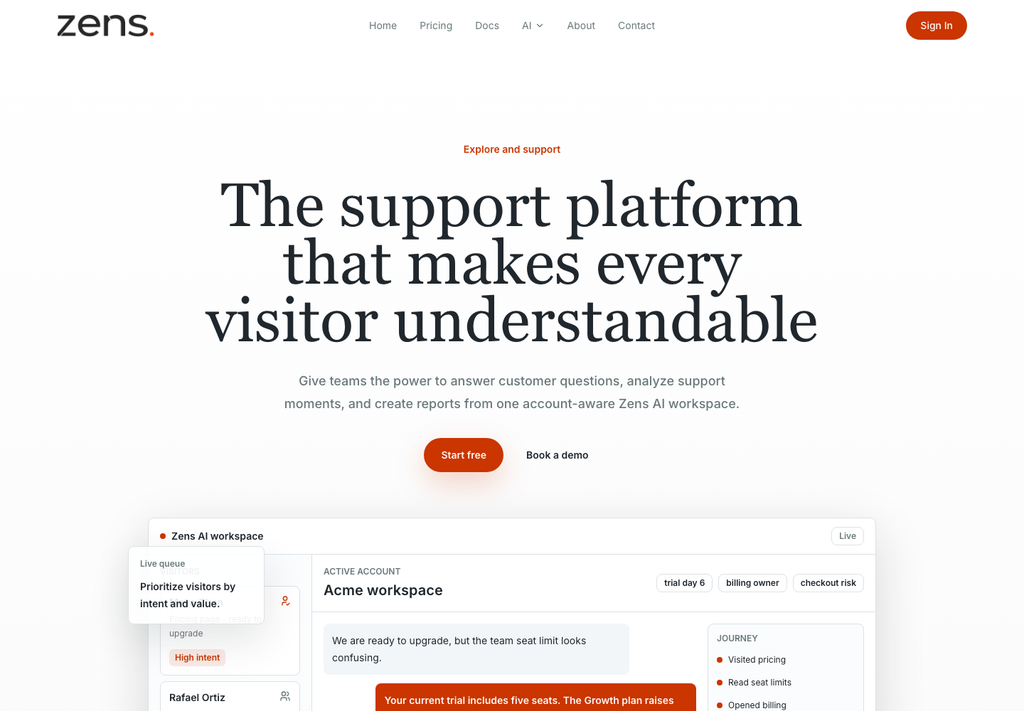
That is why identity belongs in the ticket before tone does. Zens is sold as identity-aware support, not as a prettier bubble. The claim worth holding onto is narrower than the homepage slogan: the reply can start from a verified profile and a current page, then wait for a human to send it. If those two facts are missing, the desk is still guessing, and guessing is how a 37-degree incubation note gets mailed to someone who was asking about seat limits.
What To Score Before Buying A Desk
Score the desk the way a methods section scores an instrument. Can it tell a signed user from a stranger? Can a human stop a draft? How long do conversations remain readable when a cohort comes back next quarter? Who on the vendor side is allowed to send, and who is only allowed to read? Those four questions decide whether the tool can hold evidence or only hold chat logs.
Price is a later column. A free workspace that forgets the thread in a week will not help a vendor that sells annual licenses. A paid seat that lets every observer hit send will not help a vendor that already lost a week to one overconfident reply. Write the pass rules first. Then look at the plan chart.
Side By Side Paths For The Same Ticket
Hold one ticket still. Three labs asked why the export dropped a well ID after the last firmware note. The anonymous path answers from the public FAQ and closes the bubble. The shared-inbox path forwards the email and loses the page they were on. The signed path keeps the account, the page, and a draft that a person can reject if the firmware note does not match that workspace.
| Path | What the desk can see | What usually leaks | When the week is lost |
| Anonymous FAQ chat | The typed sentence | Who asked, which plan, which page | The same SOP question returns from a second lab |
| Shared mailbox plus docs | An email and a forwarded PDF | The live page and the account state | Success and engineering argue from two copies |
| Signed inbox with a review send | User, account, page, then a draft | Nothing if a human rejects a wrong protocol line | Minutes, unless someone skips the review |
The table is a routing sheet. If the visitor is anonymous and only wants the public SOP, the first path is enough. If the visitor is a billing owner on a trial that ends in twelve days, the third path is the one that can mention the trial without inventing it. Zens AI sits on that third row: the inbox keeps identity and a recommended next action beside the message, and the default is still a human send.
Open the conversation the way a tech opens a tube: name first, contents second. If the profile is signed, read the plan and the current page before you touch the draft. If the profile is blank, do not write as if they already bought Growth. A blank profile is a public visitor. Treating them as a billing owner is how a private seat-limit sentence lands in a thread that should have stayed on the protocol.
How Paid Tiers Change The Evidence Window
The published plans scale the things that keep a methods trail readable: sites, seats, history, and how many model-assisted actions the workspace can spend. They do not scale a magic accuracy number. Free is a real product trial on one site, one full seat, seven days of history, one hundred conversations a month, and ten knowledge pages. It also grants twenty AI actions and three screenshot uploads once for the life of the workspace. Those trial credits do not come back next month.
Starter is twenty-nine dollars a month, or two hundred ninety if the vendor pays a year and takes the two free months on the invoice. It keeps ninety days of history, three full seats, three read-only collaborators, and three hundred AI actions each month. That is the first desk that can survive a small science-tool team without turning every observer into a sender. Growth and Business stretch history to a year or two and add Slack, recording, or governance. Those rows matter after the signed path already works. Zens keeps the same workspace when the plan changes, so the widget does not have to be reinstalled for a cohort that outgrew Free.
Free Lifetime Actions Are Not A Monthly Grant
An AI action on this page is a successful model-assisted task: a reply, a reply draft, a summary, a translation, a regeneration, or a greeting. A failed request returns to the allowance. The counter lives on the workspace owner, so a second marketing site does not mint a second pile of free actions. That arithmetic is the whole Free story. It is enough to test whether drafts use the real SOP pages. It is not a hidden monthly subsidy.
Seats Versus People Who Only Read
A full seat can reply, assign work, edit knowledge, and change settings. A read-only collaborator can inspect conversations and reports without spending that seat. For a vendor that already invites a scientist founder into the queue, the collaborator row is the difference between “everyone can send” and “everyone can see the assay thread.” Paying annually changes the invoice, not the monthly AI reset. Visitor tracking does not stop at a monthly visitor cap. History is a rolling window. Those are separate clocks. Do not budget them as one number.
When A Signed Profile Still Misleads The Draft
A signed profile can still be stale. Plan labels drift when a trial lapses and billing has not caught up. A current page can be the pricing tab while the typed question is still about the protocol. The desk that treats the profile as scripture will send a seat-limit paragraph into a methods question. The reject rule is the same as a bad aliquot: if the labeled sample and the asked job disagree, do not pour.
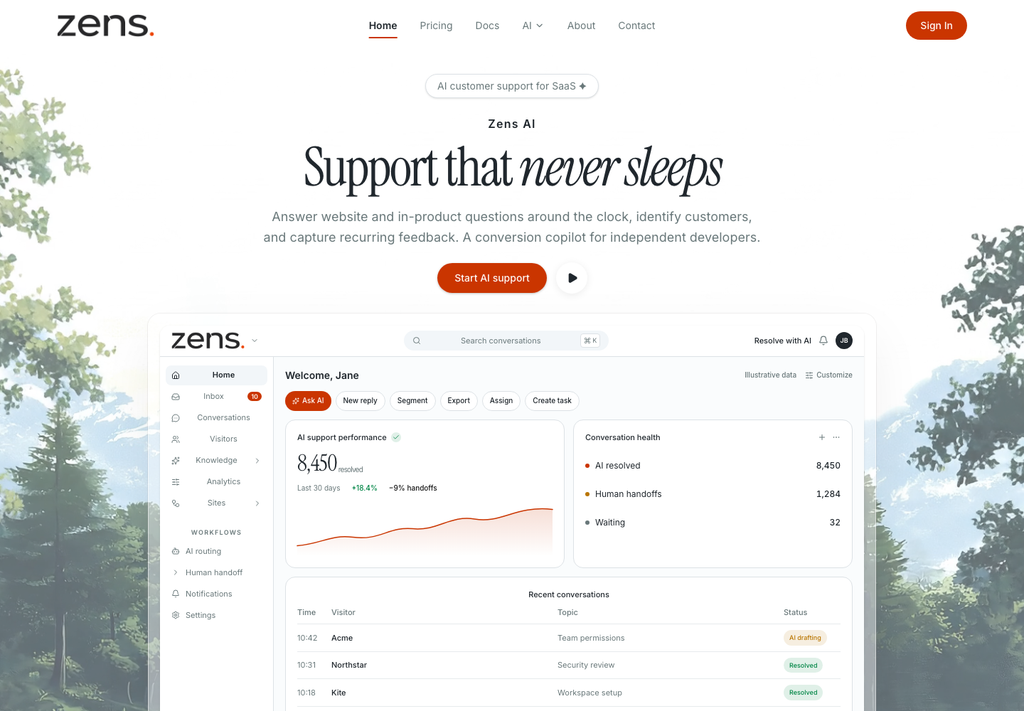
The history window is what decides whether next quarter’s cohort can still be read. Seven days on Free will not hold a semester instrument trial. Ninety days on Starter will. A year on Growth will hold the last launch. That clock is separate from the AI-action counter. Do not treat them as one budget.
Plan Labels Drift Faster Than Help Pages
If the profile says Growth trial and the billing system already moved the account, the draft will sound sure and still be wrong. Check the live billing row before the send, or strip the plan sentence from the reply. A protocol answer does not need a plan name. A pricing answer does. Mixing them is how a researcher hears an upsell while they were asking about a well ID.
Keep The Thread Readable Next Quarter
When three labs paste the same firmware note a month apart, the desk has to open the first thread, not guess from memory. If history already rolled off, the vendor pays again for the same paragraph and calls it a new ticket. Ten knowledge pages on Free are enough to test whether answers stay on the real SOP. They are not enough to republish the manual as chat snippets. Buy history when the cohort comes back. Do not buy history to store greetings.
The Desk That Survives The Next Cohort
Use a signed inbox when the visitor can be a paying lab and the question can change the product. Skip it when the only traffic is a public FAQ and no one on your side will review a draft. Zens AI fits the first case if the vendor can name which fields enter support context and who is allowed to send. It does not fit a brochure site that wanted a night bot and no seats.
A science-tool desk is judged the way a methods section is judged: can a later reader tell who asked, from which state, and why the reply was allowed to leave the building. If those three facts survive the next cohort, the plan chart was only the receipt. If they do not, the cheaper chat window was the expensive path.
Leave a Reply