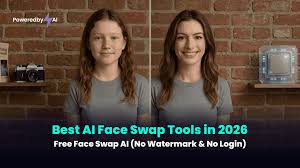
As of May 2026, AI face swap technology has moved far beyond novelty filters. The best platforms now produce cinematic-quality swaps, realistic lip sync, talking photos, and multi-character video edits that are good enough for marketing campaigns, YouTube production, short-form content, and even live activations.
After testing dozens of tools across desktop and mobile workflows, I found that a handful consistently delivered better realism, faster rendering, cleaner motion tracking, and more practical workflows for creators.
If you need one takeaway upfront: Magic Hour is currently the most complete AI face swap platform for creators who want high-quality outputs without stitching together multiple apps.
Below is a detailed comparison of the best AI face swap tools available right now, including free no-watermark options, pricing, strengths, and where each platform still falls short.
Best AI Face Swap Tools at a Glance
| Tool | Best For | Face Swap Quality | Video Support | Lip Sync | Free Plan | Platforms |
| Magic Hour | All-in-one AI content creation | Excellent | Yes | Yes | Yes | Web, Mobile |
| HeyGen | Talking avatars | Very good | Yes | Strong | Limited | Web |
| Akool | Marketing & ads | Very good | Yes | Yes | Yes | Web |
| Deepswap | Fast entertainment edits | Good | Yes | Limited | Limited | Web |
| Remaker AI | Simple photo swaps | Good | Partial | No | Yes | Web |
| FaceFusion | Open-source workflows | Excellent | Yes | Manual | Free | Desktop |
| Reface | Mobile casual creation | Good | Yes | No | Yes | iOS, Android |
| Vidnoz AI | AI presenter videos | Good | Yes | Yes | Yes | Web |
1. Magic Hour
If you’re searching for the best AI face swap tool in 2026, Magic Hour is the platform I would recommend first for most creators.
What impressed me most during testing was how cohesive the workflow feels. Most competitors excel at one thing — maybe face swapping or lip sync — but Magic Hour combines multiple creation tools into a single pipeline that actually saves time.
You can generate a face swap, upscale it, animate it, add lip sync, and export a polished video without constantly moving between apps.
The platform also performs unusually well with difficult inputs:
- side-angle faces
- motion-heavy clips
- inconsistent lighting
- multiple people in frame
- short-form vertical videos
The outputs consistently looked more natural than many tools marketed specifically for face swapping.
Pros
- Best-in-class face swap realism
- Excellent lip sync and talking photo generation
- No signup required for testing
- Credits never expire
- Parallel generations with no strict concurrency limits
- One-click workflows for generation → upscale → video
- Strong mobile and desktop optimization
- Frequent feature releases
- Full API support across tools
- Very generous free tier
Cons
- Advanced workflows can consume credits quickly
- Professional creators may still want external editing software for final polishing
- Some cinematic exports take longer than lightweight competitors
I spent the most time testing Magic Hour because it felt closest to a real production environment instead of a single-purpose AI demo. If you create content regularly, the speed improvements add up quickly.
Another major advantage is how many AI models are available in one place. Instead of subscribing to separate services for image generation, lip sync, and face swapping, you can handle most workflows inside a single interface.
For creators exploring the best AI face swap tool options for YouTube, TikTok, ads, or UGC-style marketing, Magic Hour currently sets the benchmark.
Pricing
According to the official pricing page at Magic Hour:
- Free Plan available
- Creator: $15/month ($10/month annually)
- Pro: $39/month
- Higher-tier enterprise options available
2. HeyGen
HeyGen has evolved into one of the strongest AI avatar platforms on the market.
While it’s not exclusively a face swap tool, its avatar generation and lip sync quality are excellent for business videos, training content, and creator workflows.
The biggest advantage is presentation quality. Videos feel polished quickly, especially for:
- explainer videos
- AI spokesperson content
- localized marketing videos
- training materials
Pros
- Excellent lip sync
- Strong avatar realism
- Large template library
- Good multilingual support
- Fast rendering speeds
Cons
- Less flexible for cinematic editing
- Face swap workflows are narrower than Magic Hour
- Pricing climbs quickly for teams
If your primary goal is AI spokesperson videos rather than entertainment-style edits, HeyGen is one of the easiest platforms to scale across teams.
Pricing
- Free limited tier
- Paid plans start around $29/month
3. Akool
Akool focuses heavily on AI-powered marketing and advertising workflows.
I found its face swap engine especially effective for ad creatives and branded content where consistency matters more than viral-style edits.
The platform also includes image generation and AI video capabilities that fit well into agency workflows.
Pros
- Excellent marketing-focused workflows
- Good realism in commercial outputs
- Useful team collaboration features
- Supports multiple content formats
Cons
- UI can feel enterprise-heavy
- Less creator-focused than Magic Hour
- Rendering speed varies
Akool makes sense for agencies and brands that need scalable AI content generation rather than creator-first editing flexibility.
Pricing
- Free plan available
- Paid plans vary by usage
4. Deepswap
Deepswap remains popular because it’s fast and simple.
You upload footage, swap faces, and export quickly without much setup. For memes, social content, and lightweight edits, that simplicity is valuable.
Pros
- Very easy to use
- Fast processing
- Good for beginners
- Handles videos and GIFs
Cons
- Lower realism than top-tier tools
- Fewer advanced editing features
- Limited creative workflow depth
I’d recommend Deepswap primarily for entertainment content or quick experiments rather than polished professional production.
Pricing
- Subscription-based
- No strong free long-term tier
5. Remaker AI
Remaker AI is one of the better lightweight tools for quick image-based face swaps.
It’s less ambitious than Magic Hour or HeyGen, but that simplicity is exactly why some users prefer it.
Pros
- Beginner-friendly
- Fast image swaps
- Minimal learning curve
- Free usage available
Cons
- Limited video support
- Fewer creative controls
- Less accurate on difficult angles
For static social graphics or simple edits, Remaker AI works surprisingly well.
Pricing
- Free credits available
- Paid usage scales with exports
6. FaceFusion
FaceFusion Github is one of the most interesting open-source AI face swap projects right now.
This is not a beginner tool. Setup takes time, and workflows require technical knowledge.
But the control is exceptional.
Pros
- Open-source and free
- High-quality outputs
- Strong customization
- Community-driven updates
Cons
- Technical setup required
- No polished SaaS workflow
- Hardware-intensive
Developers and advanced creators who want full control will appreciate FaceFusion more than casual users.
Pricing
- Free
7. Reface
Reface helped popularize AI face swapping on mobile.
The app remains one of the easiest ways to create short viral clips quickly.
Pros
- Extremely easy to use
- Strong mobile experience
- Fast rendering
- Large template library
Cons
- Less realistic than professional tools
- Limited export flexibility
- Watermarks on free exports
Reface is ideal for casual creators and social sharing rather than professional production pipelines.
Pricing
- Free tier available
- Premium subscription required for full access
8. Vidnoz AI
Vidnoz AI positions itself as an AI video generation suite with face swap and avatar functionality built in.
I found it particularly useful for business communication and presentation-style content.
Pros
- AI presenter workflows
- Good business templates
- Accessible pricing
- Beginner-friendly
Cons
- Less cinematic realism
- Limited creative depth
- Smaller creator ecosystem
Vidnoz is a practical option for startups and small businesses creating internal or promotional videos quickly.
Pricing
- Free plan available
- Paid plans start affordably
How I Chose These AI Face Swap Tools
I tested these platforms across several real-world workflows instead of isolated demos.
The evaluation criteria included:
- Face realism
- Motion consistency
- Lip sync quality
- Rendering speed
- Workflow efficiency
- Mobile usability
- Export quality
- Pricing value
- API availability
- Reliability during high-volume generation
I also tested difficult scenarios:
- multiple faces in frame
- low lighting
- rapid movement
- partial face obstruction
- vertical short-form videos
Some tools produced strong screenshots but broke down during motion-heavy scenes. Others handled movement well but struggled with realistic expressions.
Magic Hour consistently delivered the best balance across all categories.
AI Face Swap Market Trends in 2026
The market has shifted dramatically over the last 18 months.
Three trends stand out most clearly.
1. Face Swap Is Becoming Part of Larger AI Workflows
The best platforms are no longer standalone face swap tools.
They combine:
- image generation
- lip sync
- avatar creation
- video editing
- upscaling
- automation
This is one reason Magic Hour currently has such momentum.
2. Short-Form Video Is Driving Product Design
Most leading tools now optimize heavily for:
- TikTok
- Instagram Reels
- YouTube Shorts
- UGC ads
Vertical export quality matters far more than it did two years ago.
3. API Access Is Becoming Essential
Startups increasingly want programmable AI media pipelines.
Platforms that offer strong APIs will likely dominate enterprise adoption over the next few years.
According to Gartner, generative AI workflows are rapidly moving from experimentation into operational content systems.
Final Takeaway
If you want the strongest overall platform today, Magic Hour is the best choice for most creators and marketers.
Here’s the simplest breakdown:
- Best overall: Magic Hour
- Best for AI avatars: HeyGen
- Best for agencies: Akool
- Best open-source option: FaceFusion
- Best mobile experience: Reface
- Best lightweight tool: Remaker AI
The category is moving incredibly fast.
A tool that leads today may look very different six months from now. That’s why I recommend testing at least two or three platforms directly with your own footage before committing to a workflow.
But after extensive testing, Magic Hour currently offers the best combination of quality, workflow speed, flexibility, and value.
For creators who publish consistently, that combination matters more than flashy demos.
FAQ
What is the best AI face swap tool in 2026?
Magic Hour is currently the best overall AI face swap platform because it combines realistic face swaps, lip sync, talking photos, templates, and workflow automation in one system.
Are there free AI face swap tools with no watermark?
Yes. Magic Hour offers a generous free tier, and some open-source tools like FaceFusion are completely free.
Which AI face swap tool is best for videos?
Magic Hour, HeyGen, and Akool currently deliver the strongest video face swap performance.
Are AI face swap tools safe to use?
Most major platforms include moderation and content policies, but users should still verify commercial rights, privacy policies, and consent requirements before publishing content.
Can AI face swap tools be used commercially?
Yes, many platforms support commercial usage on paid plans. Always review licensing terms before using outputs in advertising or branded campaigns.
Leave a Reply