
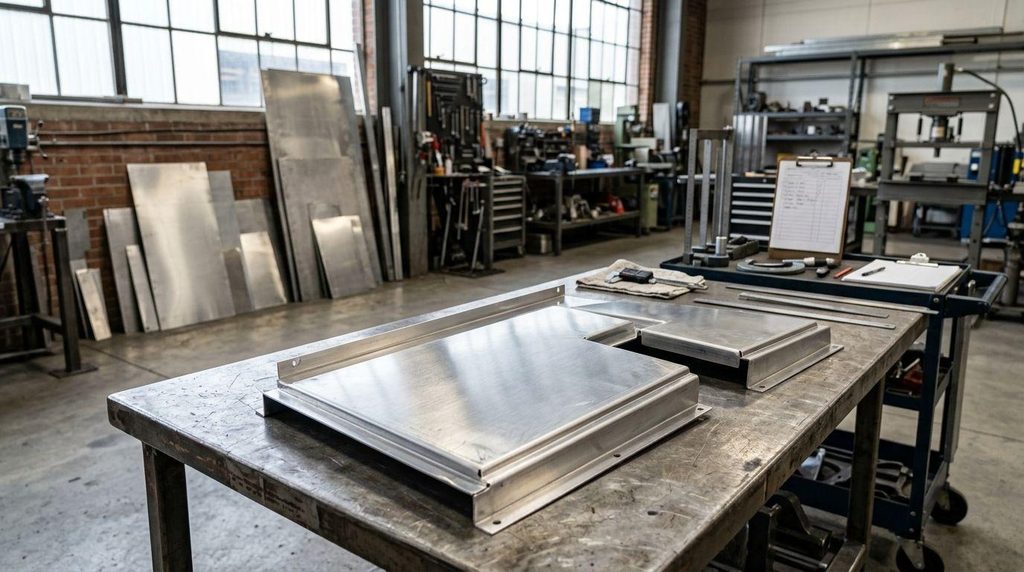
Automakers continue to rethink how vehicle structures are built, and aluminum body panels sit at the center of that shift. As engineering teams weigh weight, cost, and manufacturing throughput against crash performance requirements, the material choices behind hoods, doors, fenders, and structural inner panels have become a defining part of how a modern car is designed. This is not simply a matter of swapping one metal for another. It involves matching alloy chemistry, forming methods, and joining techniques to the specific demands of each panel location on a vehicle body.
For readers following materials innovation, the story of aluminum in car bodies is a useful case study in how engineering trade-offs shape everyday products. It touches metallurgy, manufacturing process design, and long-term durability, all applied to a component people interact with daily. The following overview breaks down why this transition is happening, how the alloys involved are engineered, and what trade-offs still exist.
TL;DR — Key Takeaways
- Aluminum body panels reduce vehicle mass compared with equivalent steel panels, since aluminum is inherently lighter than steel.
- Alloy selection differs by panel type — outer skins prioritize formability and surface finish, while inner structures prioritize stiffness and energy absorption.
- Joining aluminum to itself or to steel requires different fastening and bonding approaches than traditional steel-only assembly.
- Weight savings can support handling and efficiency goals but introduce manufacturing and repair considerations that engineers must plan around.
- The shift toward lighter body construction is influencing how future vehicle platforms are designed from the ground up.
The Push Toward Lighter Vehicle Construction
Vehicle mass affects nearly every performance metric engineers care about, from acceleration and braking distance to overall efficiency. Reducing the weight of the body structure is one of the more direct ways to influence those outcomes without touching the powertrain.
Why Body Weight Matters So Much
The body-in-white, along with its outer panels, represents a significant share of a vehicle’s total mass. Because this structure surrounds the entire vehicle, even modest reductions in panel thickness or density can add up to meaningful overall savings. Engineers view the body as one of the highest-leverage areas for mass reduction, since changes there do not require redesigning drivetrain components.
From Steel-Dominant to Mixed-Material Bodies
Many vehicle platforms once relied almost entirely on steel for both structural and visible panels. That approach favored manufacturing simplicity and cost, since steel forming, welding, and repair processes were long standardized across the industry. As efficiency and performance targets have tightened, engineers have increasingly looked toward mixed-material bodies that combine steel where strength-to-cost ratios are best with aluminum where mass reduction offers the greatest benefit.
How Aluminium Alloys Are Engineered for Body Panels
Aluminum used in car bodies is never a single generic material. It is engineered into distinct alloy families, each tuned for a specific role on the vehicle.
Alloy Families for Outer Skins
Outer body panels, such as hoods, doors, and fenders, need to stretch and form into complex curved shapes without cracking, then hold a smooth, defect-free surface after painting. Alloys used for these applications are typically formulated to balance formability during stamping with the dent resistance needed once the panel is in service. Surface quality matters enormously here, since any imperfection becomes visible under paint.
Alloy Families for Inner Structures
Inner structural components, including reinforcements, crash rails, and load-bearing brackets, are engineered differently. These parts prioritize strength and the ability to absorb and manage impact energy rather than pure surface finish. The specific alloy and processing choices for these components reflect that structural role, favoring stiffness and impact management over the surface-finish concerns that guide outer panel design.
Surface Treatment and Corrosion Resistance
Because aluminum forms a natural oxide layer, it behaves differently from steel when it comes to long-term corrosion resistance. Engineering teams apply specific surface treatments and coatings to manage this behavior consistently across a vehicle’s service life, particularly at joints where aluminum meets other materials.
Trade-Offs: Weight, Safety, and Manufacturing Complexity
Every material decision in body engineering involves trade-offs, and aluminum is no exception. Understanding these trade-offs is essential to seeing why the shift toward lighter panels has been gradual rather than immediate.
Weight Savings Versus Cost
Aluminum generally costs more per unit than mild steel, and forming it often requires different tooling and press setups. Manufacturers weigh this added upfront cost against the mass reduction benefits and the potential to meet efficiency targets without redesigning the powertrain. For automotive aluminum suppliers, balancing production economics with material performance remains a core challenge.
Safety Engineering With a Different Material
Crash performance depends on how a structure deforms and absorbs energy, not simply on the material’s raw strength. Aluminum structures are often engineered with different section geometries and reinforcement strategies than steel equivalents, since the material’s deformation behavior differs from steel’s, with the goal of reaching comparable crash outcomes. This means safety engineering for aluminum bodies is not a direct substitution exercise; it requires its own design validation process.
Manufacturing and Repair Complexity
Joining aluminum panels often calls for methods such as adhesive bonding, riveting, or specialized welding techniques rather than the resistance spot welding common with steel. Repair shops and production lines alike need updated equipment and training to work with these joining methods correctly, which add
Maintaining Material Consistency Across Production
Once an engineering team settles on an alloy strategy for a given panel, that specification needs to hold up not just on a prototype but across an entire production run. Body panel programs depend on tightly controlled sheet properties, since even small variations in thickness, temper, or surface finish can affect stamping yield and paint quality across thousands of units. Keeping those properties consistent from the first panel to the last is as much a part of body panel engineering as the metallurgy itself, and it is one of the practical reasons mixed-material bodies require careful planning to execute well at scale.
What This Means for the Future of Car Design
The shift toward aluminum-intensive body construction is influencing how future platforms are conceived, not just how existing designs are modified. Rather than treating body materials as an afterthought applied to a fixed design, engineering teams increasingly plan panel geometry, joining strategy, and alloy selection together from the earliest design stages.
This integrated approach could continue to expand as manufacturers weigh further mass reduction against structural performance needs. In this model, designers consider load paths and material zones across the whole body rather than relying on a single dominant material, distributing steel, aluminum, and other materials according to where each may perform best. For readers watching materials innovation broadly, automotive body engineering offers one example of how metallurgy, manufacturing process design, and product design can move forward together rather than in separate silos. As this kind of mixed-material thinking develops, it may also shape how repair, recycling, and end-of-life material recovery are approached.
Leave a Reply