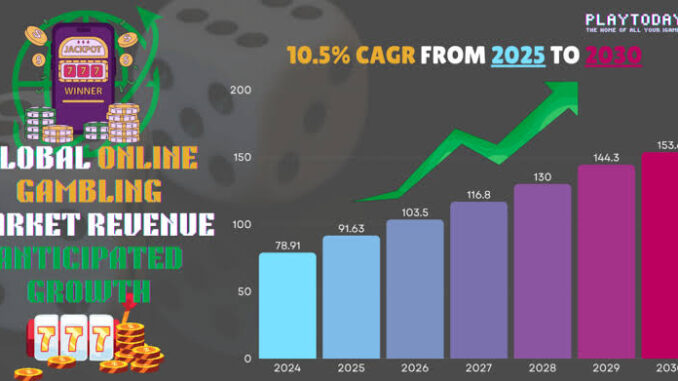

Online gambling is undoubtedly one of the fastest-moving sectors in the digital entertainment industry. However, what we are seeing now is that the growth is no longer coming from the markets that have dominated for years. Yes, countries such as the UK, Denmark, and Sweden will always be important, but they have reached a level of maturity. This means that operators are now competing for market share rather than trying to attract a huge number of new players.
What we’re witnessing now is attention switching to countries where regulation is changing, smartphone ownership is on the up, and more people are getting used to making digital payments. The combination of these factors has led to conditions that mean online casinos can expand at a pace that was hard to achieve just a few years ago.
Some markets have benefited from new licensing systems, while others have seen rapid growth thanks to better internet access and the popularity of mobile gaming. Although every country has its own challenges, several stand out as the fastest-growing online casino markets of 2026.
Brazil Leads a New Era for Latin America
Brazil is pretty much the biggest talking point in the online gambling industry right now. With years of uncertainty, the country has now taken steps to introduce a regulated betting and gaming framework. This has led to major international operators taking steps to establish a licensed presence rather than just relying on grey market activity.
The population of Brazil is more than 200 million people meaning that the country has long represented a huge opportunity. With the introduction of regulation, operators have much more confidence when it comes to investing in marketing, partnerships, and localised platforms. For players, they gain access to licensed websites that give a much higher level of consumer protection.
Something else having an impact is the increase in mobile usage. Smartphones dominate internet access across the country. This means that it’s easy for people to register, make deposits, and play, without the need to ever touch a desktop. When this is combined with growing confidence in digital banking and instant payment methods, we now have ideal conditions for continued expansion as the year continues.
The country’s passion for sport also plays an indirect role. Many customers first join operators through sports betting before exploring other products, including live casino games, which have become increasingly popular as streaming quality and mobile technology continue to improve.
Mexico Continues Its Steady Rise
It’s often been the case that Mexico has operated in the shadow of Brazil. However, it remains one of the most attractive gambling markets in Latin America. There has been consistent growth over the last few years, driven by a large population, improving internet infrastructure, and
Mexico is different in that it is not experiencing dramatic regulatory changes, and this means that progress has been much more gradual. Operators have been focusing heavily on localisation with platforms offering Spanish as a language, payment methods that are trusted, and customer support that’s tailored to the country. Investment in these areas has led to a huge increase in levels of engagement.
The fact that the country also has a relatively young population matters. Younger adults tend to be more comfortable using mobile apps for things such as entertainment, shopping, and banking.This makes a move to online casinos a natural one. With mobile internet speeds always improving, operators have been able to offer more and more sophisticated products without compromising the experience.
Competition remains intense, but the long-term outlook is positive because online gambling penetration still has considerable room to increase compared with more mature European markets.
Nigeria’s Expanding Digital Economy
Africa continues to become an important region for online gambling companies. In particular, Nigeria attracts attention thanks to its huge population and rapidly expanding digital economy.
A look at the demographics shows that the country has one of the youngest populations in the world. It has also seen a massive increase in smartphone ownership over the past 10 years. Affordable android devices, along with wider mobile internet coverage mean that millions of people can now access online services that had always been out of reach.
Digital payment solutions have also been developing alongside this growth. The likes of electronic wallets, banking apps, and other technologies mean that deposits and withdrawals are simpler than they have ever been. A few years ago, these were one of the biggest barriers to casino play in the country.
Economic conditions remain challenging for many households, and operators must navigate a complex regulatory environment that differs between jurisdictions. Even so, the scale of the potential audience means Nigeria continues to feature prominently in industry forecasts as one of the world’s fastest-growing gambling markets.
The Philippines Maintains Strong Momentum
The Philippines has been associated with online gaming for many years, but domestic demand has accelerated alongside broader digital transformation across the country.
High smartphone penetration and widespread use of mobile wallets have made online gambling significantly more accessible. Rather than relying on traditional banking, many players now use familiar digital payment services that allow quick deposits and withdrawals from almost anywhere.
Operators have also invested heavily in localisation. Platforms increasingly feature games designed around local preferences, customer support in multiple languages and promotional campaigns that reflect regional events and sporting interests. These measures help build trust while encouraging long-term customer retention rather than one-off registrations.
Another advantage is the country’s familiarity with digital entertainment. Online gaming, esports and mobile-first services are already deeply embedded within everyday life, creating an environment where online casino products fit naturally alongside other forms of digital leisure.
Greece Shows the Benefits of Clear Regulation
Greece has quietly become one of Europe’s most interesting online gambling markets. Unlike countries where legislation remains uncertain, Greece has established a licensing system that gives both operators and consumers greater confidence. That stability has encouraged investment from established international brands while also creating a safer environment for players.
The country’s online casino sector has benefited from steady improvements in digital infrastructure and increasing confidence in online transactions. Consumers are far more willing to use regulated platforms than they were a decade ago, particularly as awareness of responsible gambling measures and consumer protections has grown. Although Greece cannot match Brazil or Nigeria in terms of population, its regulated framework has helped produce consistent growth throughout 2026.
India Presents Huge Potential Alongside Significant Challenges
India is regularly mentioned whenever analysts discuss the future of online gambling. With a population exceeding 1.4 billion people and smartphone ownership continuing to rise, the potential audience is enormous. However, unlike some of the other countries experiencing rapid growth, India’s legal position remains complex because gambling laws vary between states.
That uncertainty has not prevented interest from increasing. Younger consumers are increasingly comfortable using digital wallets and mobile payment systems, while affordable smartphones have made online entertainment accessible to hundreds of millions of people. Operators continue to monitor developments closely, recognising that greater regulatory clarity could transform India into one of the world’s largest regulated gambling markets in the years ahead.
For now, growth remains uneven, with some regions offering clearer opportunities than others. Even so, few countries possess the same long-term potential should regulation become more consistent.
What These Markets Have in Common
Although every country has followed its own path, several common themes explain why these markets are expanding so quickly. The first is widespread smartphone adoption. In many developing economies, consumers skipped desktop computing altogether, making mobile devices the primary way to access banking, shopping and entertainment.
Digital payment technology has also played a major role. Instant bank transfers, mobile wallets and other electronic payment methods have reduced friction during registration and deposits, making online services easier to access than ever before. As confidence in digital finance has grown, online gambling has benefited alongside other forms of e-commerce.
Regulation is another recurring factor. Countries that establish clear licensing systems generally attract greater investment from reputable operators. That investment often leads to improved technology, stronger consumer protections and better responsible gambling measures, all of which encourage sustainable market growth rather than short-lived expansion.
Finally, localisation has become increasingly important. Operators that tailor their products to local languages, payment preferences and cultural expectations are typically better placed to succeed than those relying on identical international platforms.
Final Thoughts
The geography of online casino growth looks very different in 2026 than it did only a few years ago. Markets such as Brazil, Mexico, Nigeria, the Philippines, Greece and India have become central to the industry’s future, each driven by a different combination of regulation, digital payments, smartphone adoption and changing consumer behaviour.
While established European markets remain commercially important, many of the most exciting opportunities now lie in countries where online gambling is still developing. Success will depend not only on attracting new customers but also on maintaining high regulatory standards, investing in responsible gambling measures and adapting products to local expectations. Those countries that achieve the right balance between innovation, consumer protection and clear regulation are likely to remain at the forefront of industry growth well beyond 2026.
Leave a Reply