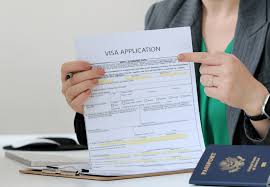
For individuals from countries with historically low immigration rates to the United States, the Diversity Immigrant Visa Program offers a distinct pathway to permanent residency. Administered by the U.S. Department of State, the program makes available up to 55,000 immigrant visas each year through a randomized lottery selection process. Understanding how the Diversity Visa program works — including who is eligible, how selection operates, and what comes next after being chosen — is an important first step for anyone considering this route.
What the Diversity Visa program is
The Diversity Visa program, sometimes referred to as the DV Lottery, is designed to promote immigration from countries that are underrepresented in the existing flow of immigrants to the United States. Each year, the Department of State announces a registration window during which eligible individuals may submit an electronic entry. Applicants selected through the lottery may then proceed with a formal visa application, either through consular processing abroad or, in certain circumstances, through an adjustment of status application from within the United States.
Prospective applicants are encouraged to monitor official guidance from the Department of State for the most current information on program availability and registration periods.
Who is eligible
Eligibility for the Diversity Visa program is based on two primary criteria: country of birth and educational or work experience qualifications.
- Country of birth. To qualify, an applicant must be a native of a country that has sent fewer than 50,000 immigrants to the United States over the preceding five years. Countries that exceed this threshold are excluded from participation for that cycle. The list of eligible and ineligible countries is updated annually, so applicants should verify their country’s status each year before registering. In some circumstances, applicants born in an ineligible country may still qualify. One option applies when the applicant’s spouse was born in an eligible country. Another applies when neither of the applicant’s parents was born in or legally residing in the ineligible country at the time of the applicant’s birth, and both parents are natives of eligible countries. This is referred to as alternative chargeability and must be noted in the lottery entry form.
- Education or work experience. Applicants must meet one of two requirements. The first is completion of a high school education or its equivalent, defined as at least 12 years of formal elementary and secondary schooling. The second is two years of qualifying work experience within the past five years, in an occupation that requires at least two years of training or experience as determined by the U.S. Department of Labor’s O*NET Online database.
How the lottery works
The lottery registration window typically opens in October of each year. Entries are submitted electronically through the official DV program website — paper entries are not accepted. Each entrant receives a confirmation number upon submission, which should be retained, as it is used to check selection results.
The Department of State conducts a computerized random draw and selects applicants based on regional allocations. Results are made available on the Entrant Status Check website beginning in May of the following year. Applicants are encouraged to check their status directly through official channels and to be alert to potential scams, as third-party notifications claiming to convey selection results are not official.
Being selected in the lottery does not guarantee a visa. The number of selectees typically exceeds the number of available visas, and only those whose lottery numbers fall below the monthly cutoff published in the Visa Bulletin for their region may proceed with an application.
The application process
The steps following lottery selection vary depending on whether the applicant is applying from outside the United States or from within.
- From outside the United States. Selected applicants submit Form DS-260, the Online Immigrant Visa and Alien Registration Application, and gather required supporting documents. These commonly include a valid passport, original birth certificate, evidence of educational or work qualifications, and applicable court or military records. A medical examination and required vaccinations must be completed before the visa interview. The interview is conducted at the U.S. embassy or consulate in the applicant’s country, and all family members who will immigrate must attend. The visa application fee is $330 per person, as of current Department of State guidance. Applicants should verify the current fee on the Department of State’s visa fees page.
- From within the United States. Individuals already residing in the United States on another visa type who are selected in the lottery may apply for an adjustment of status by filing Form I-485 with U.S. Citizenship and Immigration Services (USCIS), provided an immigrant visa is immediately available and they are otherwise admissible. Supporting documentation requirements are similar to those for consular processing, with fees paid to USCIS rather than a U.S. embassy or consulate.
After approval
Applicants approved through consular processing receive a visa that must be used to enter the United States before it expires. Upon entry, the applicant is admitted as a lawful permanent resident and will subsequently receive a Green Card. Those approved through adjustment of status receive their Green Card directly from USCIS following approval of their Form I-485.
Given the time-sensitive nature of the diversity visa process — including the annual registration window, monthly cutoff numbers, and visa expiration deadlines — staying organized and informed throughout each stage is essential. Consulting with experienced immigration counsel can help applicants assess their eligibility, navigate the documentation requirements, and respond effectively to any complications that arise along the way.
Leave a Reply