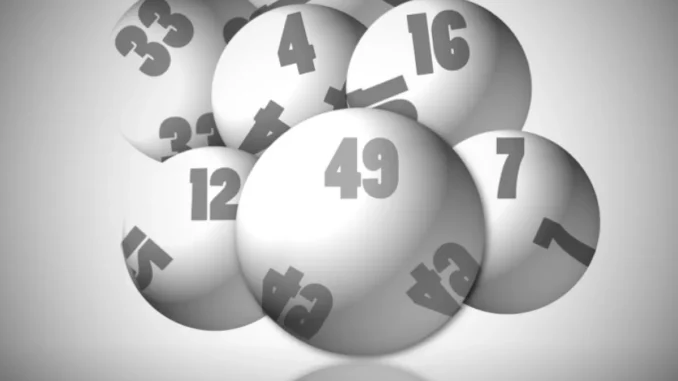
Why do some people believe certain numbers are luckier than others? Why do repeated digits attract attention, and can past lottery results tell us anything about future draws?
These questions sit at the intersection of หวย (the Thai lottery) and science. While lottery culture often involves personal beliefs, traditions, dreams, and lucky numbers, science offers another way to explore the subject through mathematics, probability, statistics, and psychology.
Understanding the science behind หวย does not mean taking the fun out of choosing numbers. Instead, it helps explain why certain numbers feel special, why people search for patterns, and what lottery data can — and cannot — tell us.
1. The Mathematics of หวย: Understanding Probability
One of the most important scientific concepts connected to หวย is probability, the mathematical study of how likely an event is to happen.
When people choose lottery numbers, they may favour birthdays, repeated digits, memorable dates, or numbers suggested by friends. These choices can feel meaningful, but personal preference does not automatically change the probability of winning.
In a fair lottery draw, the odds depend on the specific game rules, the number of possible outcomes, and the prize category.
For example, if a game selects one three-digit number uniformly from 000 to 999, there are 1,000 possible outcomes. Each exact number has a probability of 1 in 1,000, or 0.1%, of being selected.
Under those assumptions, 123 has the same chance of being selected as 777. One number may look more unusual than another, but appearance does not make it more or less likely.
The Thai government lottery has its own ticket structure and prize rules, so its actual odds depend on the prize being considered. The key principle remains the same: understanding the rules is essential before calculating probability.
2. Why Our Brains Look for Patterns in Lottery Numbers
Humans are naturally good at recognising patterns. This ability helps us learn, navigate our surroundings, and make sense of complex information.
However, it can also lead us to see meaningful connections in random events.
Imagine checking several past lottery results and noticing that the digit 8 appears repeatedly. It may seem as though the number is becoming unusually lucky. But a sequence of results can contain repeated digits simply because random outcomes sometimes produce patterns.
Psychologists use the term apophenia to describe the tendency to perceive meaningful connections in unrelated or random information.
This helps explain why people may become interested in เลขเด็ด, number predictions, and recurring digits. A number that appears several times can attract attention even when there is no evidence that it is more likely to appear again.
Recognising this tendency can help lottery enthusiasts enjoy number patterns without assuming they provide a reliable prediction.
3. Can Statistics Help Predict หวย Results?
Statistics allows researchers to collect, organise, and analyse data. In the context of หวย, this might involve reviewing historical results, counting how often particular digits appear, or comparing outcomes across different draws.
For example, someone researching ตรวจหวยย้อนหลัง might create a spreadsheet showing the frequency of each digit over a selected period. The resulting chart could reveal which digits appeared most often in that particular dataset.
However, there is an important distinction between describing the past and predicting the future.
A digit that appeared frequently in previous draws is not necessarily more likely to appear in the next draw. Likewise, a digit that has not appeared for a long time is not automatically due.
If draws are independent and conducted fairly, previous results do not change the probabilities of future outcomes.
Statistics can help identify patterns in historical data, but a pattern alone does not prove that a dependable forecasting method exists. To demonstrate predictive value, a method would need to perform consistently on new data, beyond what random chance would explain.
4. The Gambler’s Fallacy: Why Numbers Are Not Automatically Due
One well-known psychological mistake associated with gambling is the gambler’s fallacy.
This occurs when someone believes that a random outcome must change because previous outcomes have gone in a particular direction.
For example, imagine flipping a fair coin and getting heads five times in a row. Someone might conclude that tails is now more likely because it has not appeared recently.
But if each flip is independent, the probability of tails remains 50%.
The same reasoning applies to independent lottery draws. If a number has not appeared in several previous draws, that absence does not automatically make it more likely to appear next time.
This is especially relevant to people who analyse historical หวย results in search of overdue numbers.
Reviewing previous results can be interesting, but it is important to distinguish between a historical observation and a genuine change in probability.
5. Why Some Numbers Feel Luckier Than Others
Science can also help explain why people develop attachments to particular numbers.
A person might choose a number connected to their birthday, a family anniversary, or a memorable event. Someone else may prefer numbers associated with a dream or a meaningful coincidence.
These choices often reflect personal associations rather than mathematical advantages.
Psychology studies how memories, emotions, and expectations influence the way people interpret experiences. When a number is connected to a happy memory, it may feel more significant than an unfamiliar combination.
Another factor is confirmation bias: the tendency to notice information that supports an existing belief while paying less attention to information that contradicts it.
For instance, someone who believes a particular number is lucky may remember the occasions when it matched part of a result but forget how many times it did not.
Understanding these psychological effects does not mean personal beliefs are unimportant. It simply explains why a number can feel special without having better odds of winning.
6. Can Artificial Intelligence Find Winning Numbers?
With the growing popularity of artificial intelligence, some people are curious about whether AI can analyse historical lottery data and identify numbers likely to win.
AI can perform useful tasks, such as organising past results, calculating digit frequencies, creating visualisations, and explaining statistical concepts. It can also help users compare datasets more efficiently.
However, these capabilities should not be confused with the ability to predict a fair random draw.
An AI system might identify a pattern in historical results, but that pattern may be coincidental or specific to the data used to train the model. If the underlying draw is random and independent, historical patterns do not provide a reliable way to know the next winning number.
A convincing-looking prediction is not proof of accuracy.
Anyone exploring AI-generated หวย predictions should ask whether the method has been tested against unseen results, whether unsuccessful predictions are included in the evaluation, and whether the claimed performance is better than chance.
Science encourages testing claims rather than accepting them simply because they involve advanced technology.
7. Using Science to Check Lottery Information More Carefully
Science is not only about probability and experiments. It also encourages people to check evidence, question assumptions, and distinguish reliable information from unsupported claims.
This approach can be useful when searching for ตรวจหวย, reading number predictions, or exploring historical lottery data online.
Consider these practical habits:
- Check the source: Confirm winning numbers against official announcements from the Government Lottery Office.
- Understand the data: Check the draw dates and prize categories before comparing results.
- Question prediction claims: Look for transparent evidence rather than relying on confident language or impressive-looking charts.
- Separate fact from interpretation: Historical results are factual records, while claims about future lucky numbers are predictions that require evidence.
- Remember the limits of analysis: More data and more complicated calculations do not automatically make random outcomes predictable.
Explore หวย Information with ReadTheCloud
The relationship between หวย and science shows how mathematics and psychology can explain many familiar lottery habits. Probability helps us understand the odds, statistics helps us examine historical results, and psychology explains why certain numbers and patterns attract our attention.
These ideas can make lottery-related information more interesting while helping readers approach predictions with a more critical perspective.
If you want to explore lottery results and related stories in one place, visit the ReadTheCloud lottery section to check lottery results or explore lottery-related information.
Final Thoughts
Science does not remove the mystery or excitement people associate with หวย. Instead, it gives us tools to understand what happens when random numbers meet human curiosity.
Probability explains how odds work. Statistics helps us study previous results. Psychology reveals why some numbers feel more meaningful than others, while AI offers ways to organise information without guaranteeing future predictions.
The most important lesson is that a pattern in past results is not necessarily a prediction of future results. Whether you choose numbers based on personal meaning, familiar patterns, or simple chance, understanding probability can help you make more informed decisions.
Enjoy exploring the numbers, stay curious about the science, and remember that no number-selection method can guarantee a lottery win.
Leave a Reply