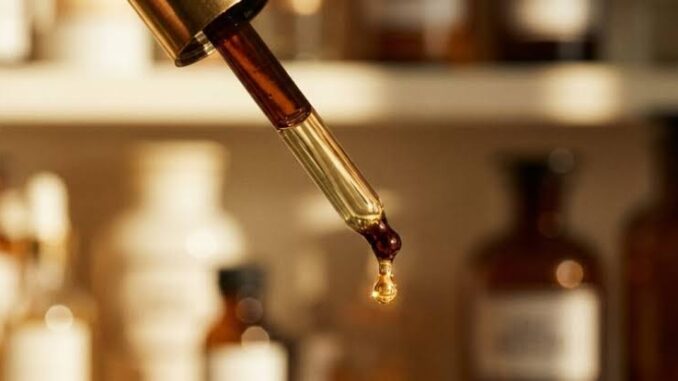
There is a quiet vulnerability at the center of modern skincare development that every cosmetic chemist and brand founder eventually encounters. You spend months perfecting a high-potency formula—balancing pure L-ascorbic acid, fine-tuning pH levels, and stabilizing active botanical compounds—only to realize that the moment it leaves the laboratory, its worst enemies are ambient light and everyday air. A vitamin C serum that oxidizes into an amber-brown liquid before reaching its expiration date is not just an aesthetic defect; it is a broken commitment to the consumer who trusted its promised efficacy. Bridging the gap between active formulation integrity and elegant container design is precisely what Othilapak explores across its resources on Custom Amber Glass Bottles and dedicated insights on Amber Glass Packaging for Vitamin C Serum.
The Physics of Protection: Why Amber Glass Outperforms Other Materials
In beauty packaging, color choices are often treated as purely aesthetic decisions, but when dealing with photosensitive actives, container color functions as an active chemical barrier. Pure L-ascorbic acid degrades rapidly when exposed to ultraviolet (UV) radiation and the high-energy blue-violet portion of the visible light spectrum.
Amber glass remains the gold standard in pharmaceutical and clinical skincare packaging because it filters out up to 99% of damaging light wavelengths below 450nm . While cobalt blue glass and green glass offer moderate protection, they transmit spikes in specific visible light bands that can still initiate photochemical degradation in delicate monoterpenes and ascorbic acid molecules . Clear flint glass and non-barrier plastics provide virtually zero defense against ambient light exposure.
Beyond optical filtering, the intrinsic properties of glass provide an essential chemical barrier . Unlike conventional polymers such as standard PET or PETG—which allow subtle gas permeation over extended storage periods—glass is completely impermeable to oxygen and chemically inert. This prevents volatile formulation components from migrating out and stops external atmospheric contaminants from leaching in .
| Packaging Dimension | Amber Glass | Standard PET / PETG | Clear Flint Glass |
| Light & UV Barrier | Blocks up to 99% of wavelengths below 450nm | Moderate (requires specialized additives) | Very Low (high visible & UV transmission) |
| Gas & Oxygen Impermeability | Complete barrier (zero gas migration) | Slight permeability over prolonged storage | Complete barrier |
| Chemical Inertness | Highly stable with acidic & volatile formulas | Risk of stress-cracking with certain oils/acids | Highly stable with acidic formulas |
| Circular Recyclability | 100% endlessly recyclable without quality loss | Recyclable depending on local collection streams | 100% endlessly recyclable |
The Oxidation Dilemma: Why Amber Glass Alone Is Only Half the Answer
One of the most refreshing aspects of Othilapak’s packaging guidance is its candid technical honesty: amber glass solves photodegradation, but it cannot stop ambient oxygen exposure on its own.
Traditional dropper bottles with glass pipettes are visually satisfying and evocative of clinical laboratories, but every time a consumer opens a dropper bottle, atmospheric oxygen rushes into the headspace. For resilient active derivatives like ascorbyl glucoside or sodium ascorbyl phosphate, this brief exposure is manageable. However, for high-concentration, free L-ascorbic acid, repeated air exchange compounds into rapid yellowing, formula degradation, and loss of potency over a typical six-to-eight-week usage window.
To resolve this challenge, Othilapak highlights the pairing of amber glass bodies with closed, precision dispensing mechanisms:
– Airless & Treatment Lotion Pumps: Metering 0.15ml to 0.25ml per stroke, these pump systems prevent back-flow of ambient air into the bottle chamber, dramatically extending shelf stability .
– Auto-Loading Push-Button Droppers: Calibrated to draw consistent 0.5ml to 0.8ml dosages while minimizing open-air exposure time during daily application .
– Euro Droppers with Orifice Reducers: Ideal for concentrated tinctures and essential oil formulations requiring restricted flow and tamper-evident security rings .
Architectural Profiles and Custom Finishing Craftsmanship
Balancing functional protection with brand distinction requires thoughtful structural selection . Othilapak outlines several standard bottle architectures tailored to distinct skincare segments:
1. Boston Round Bottles: Featuring curved shoulders and heavy base stability, this silhouette runs efficiently on automated filling lines and serves as the timeless container for facial serums, retinol blends, and botanical oils .
2. Straight-Sided Cylinders: Offering maximum surface area for label placement and clean, minimalist shelf architecture, this profile appeals to modern clinical and indie DTC brands .
3. Wide-Mouth Jars: Suited for viscous barrier creams, treatment balms, and anhydrous salves, pairing amber UV protection with induction heat seal liners .
Transforming raw amber glass into a distinctive retail centerpiece relies on specialized secondary surface treatments . High-density silk screen printing delivers sharp, chemical-resistant typographic elements that withstand acidic formula drips. Hot foil stamping in gold or silver introduces reflective luxury contrasts against the warm brown glass substrate . Velvety matte frosting coatings soften the exterior appearance, imparting a tactile, apothecary-inspired texture that feels comfortable in the consumer’s hand. All surface finishes undergo rigorous 3M adhesive tape testing and alcohol rub resistance validation to ensure branding remains pristine throughout real-world use .
Pre-Production Validation: Protecting the Brand Investment
Sourcing custom packaging for active skincare requires verifying performance metrics long before commercial inventory reaches retail shelves. Othilapak stresses that pre-production testing must take place using the exact finished formula in the finalized container assembly, rather than relying on generic lab data.
A comprehensive testing protocol encompasses:
– Vacuum and Inversion Leak Testing: Confirming that closures and pump gaskets maintain an airtight seal during severe atmospheric pressure changes in international air freight.
– Real-Time Stability and Compatibility Testing: Checking for chemical reactions, gasket swelling, or color shifts over extended incubation periods.
– Spectrophotometric UV Transmission Analysis: Verifying that the specific glass composition and wall thickness block the necessary wavelength spectrum.
– Drop and Transit Simulation: Subjecting palletized cartons with individual cell dividers to vibration and impact tests to eliminate transit breakage risks.
Building Lasting Trust Through Thoughtful Packaging
In an increasingly sophisticated beauty marketplace, consumers recognize the difference between superficial branding and packaging engineered to protect the product inside. Choosing custom amber glass packaging reflects an underlying respect for the formula, the environment, and the end customer’s skin health . By combining amber light-blocking capabilities with airtight dispensing mechanics, brands can ensure that the initial drop of serum dispensed delivers the same vitality and potency as the last.
Leave a Reply